“We must end the mentality of ever larger platforms”: Why USVs are scaling
Gen Sir Gwyn Jenkins, First Sea Lord, emphasised the importance of technological advancements in enhancing the Royal Navy's capabilities and deterrence against Russian threats in the North Atlantic. (Photo: author)
Multiple USV programme milestones announced last week, aligned with a reinforcement of the Royal Navy’s vision for a hybrid fleet, point to innovation-led ambition but also to a structural calculation with resource ceilings that neither London nor Washington can ignore.


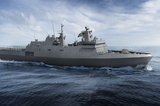
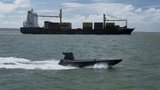
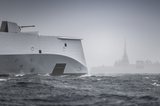
A week rarely arrives in which a single theme runs so clearly. Yet last week delivered it: the US Navy (USN) reportedly outlined plans to field thousands of uncrewed surface vessels (USVs) in the Indo-Pacific; Saildrone unveiled a combat-capable 52m USV with vertical-launch strike capability; Rheinmetall and Kraken Technology Group moved from prototype to serial production; HII announced four additional ROMULUS 151 hulls entering manufacture; and Anduril Industries partnered with Kraken to bring a family of small USVs to USN service.
Delivering the inaugural Lord Fisher Lecture at RUSI on 29 April 2026, Gen Sir Gwyn Jenkins, First Sea Lord, offered a
Our news & analysis is now part of Defence Insight®
A Basic-level or higher Defence Insight subscription is now required to view this content.

More from Naval Warfare
-
![Frigates and submarines anchor Brazilian naval modernisation worth US$5.52 billion]()
Frigates and submarines anchor Brazilian naval modernisation worth US$5.52 billion
Shipbuilding programmes established over the past decade are setting Brazil's course towards having one of the most modern navies in the region.
-
![Partnerships will be critical for future projects at Latin American shipyards]()
Partnerships will be critical for future projects at Latin American shipyards
Multiple Latin American navies are modernising their fleets by prioritising domestically manufactured surface vessels and even submarines via international partnerships.
-
![SOF Week 2026: US NSW explores 3D-printed USVs for forward-deployed operations]()
SOF Week 2026: US NSW explores 3D-printed USVs for forward-deployed operations
US Naval Special Warfare Command is assessing the feasibility of rapidly producing expendable mid-sized USVs in theatre to support SOF and maritime security missions.