US Navy requests Kongsberg NSM firing from LCS


Kongsberg will test fire its Naval Strike Missile (NSM) from the US Navy’s Littoral Combat Ship (LCS) under the Foreign Comparative Testing programme. Kongsberg announced the firing, which will take place in September, on 17 September.
The firing was requested by the US Navy to demonstrate the capability to engage a surface target at a range of 100 nautical miles from an LCS class ship. The test will take place from the USS Coronado, an Independence-class LCS.
Harald Ånnestad, president, Kongsberg Defence Systems, said: ‘We are very pleased that the US Navy has decided to evaluate the NSM missile. This contract does not however include any commitment for the US Navy beyond the test, but confirms NSM`s unique capabilities and the test will enable the US Navy to study it closer in a realistic scenario.’
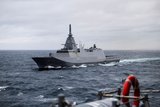
This demonstration follows a successful NSM live fire event from the Royal Norwegian Navy´s Fridtjof Nansen-class frigate witnessed by the US Navy during the recently completed Rim of the Pacific 2014.


More from Naval Warfare
-
![Australian industry programme builds pipeline for Virginia-class sustainment]()
Australian industry programme builds pipeline for Virginia-class sustainment
Australian businesses can now bid to support Virginia-class submarine sustainment in Western Australia, as momentum around the Henderson Defence Precinct also builds.
-
![South Korea, Japan and Turkey vie for US shipbuilding access in future frigate contest]()
South Korea, Japan and Turkey vie for US shipbuilding access in future frigate contest
Washington’s search for a foreign-built frigate could hand South Korea, Japan and Turkey a larger prize than a double-hull order: a foothold inside the US shipbuilding industrial base.
-
![Russia’s uncrewed boat portfolio hints at future naval demand]()
Russia’s uncrewed boat portfolio hints at future naval demand
Ukrainian intelligence has catalogued more than 20 Russian uncrewed surface vessels, revealing a portfolio weighted towards mine warfare and logistics, with implications for Western naval investment.
-
![Ukraine’s new long-range 12m autonomous vessel can deploy other drones]()
Ukraine’s new long-range 12m autonomous vessel can deploy other drones
Ukraine’s UForce unveiled the MV11 uncrewed surface vessel, designed to launch and support other naval drones at sea, fuelling debate over the future of autonomous maritime task groups.