A closer look at the US Navy’s $268 billion investment in shipbuilding by 2031
Analysts have been sceptical about the future Trump-class battleship USS Defiant. (Photo: US Navy)
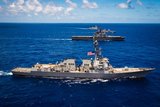
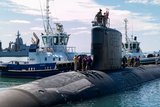
The recently released USN 2026 Shipbuilding Plan anticipates the procurement of 185 crewed and uncrewed platforms in the next five years.


The US Navy (USN) intends to invest $268 billion in shipbuilding programmes by 2031, according to its 2026 Shipbuilding Plan released last week. The funds will cover the acquisition of 122 surface vessels and submarines and 63 uncrewed systems.
The branch plans to field and deploy a combination of high-end maritime assets with low-cost systems that can be mass-produced. This approach also seeks to deepen the implementation of Expanded Maritime Manoeuvre (EMM) and Distributed Maritime Operations (DMO) concepts.
“It is a generational undertaking to restore America’s position as a seapower state,” Hung Cao, acting secretary of the navy, outlined. “We
Our news & analysis is now part of Defence Insight®
A Basic-level or higher Defence Insight subscription is now required to view this content.



More from Naval Warfare
-
![Lessons shaping the next phase of Arleigh Burke production post-Flight IIA]()
Lessons shaping the next phase of Arleigh Burke production post-Flight IIA
The accelerated delivery of the final Flight IIA destroyer, USS Patrick Gallagher, showcases the payoff of years of workforce investment and process reform at Bath Iron Works, with the lessons feeding into Flight III production.
-
![Ukraine war drives ‘minimum deployable capability’ doctrine in uncrewed systems development]()
Ukraine war drives ‘minimum deployable capability’ doctrine in uncrewed systems development
Ukraine’s battlefield has rewritten the rules of uncrewed systems development. For Syos Aerospace, real-time operator feedback, lean serial production and a system-of-systems philosophy are central to its operating model.
-
![Sealift shortfalls set to drive opportunities across NATO navies]()
Sealift shortfalls set to drive opportunities across NATO navies
A new Council on Geostrategy primer warns that NATO cannot defend its own supply lines. As the alliance faces a sealift and logistics escort deficit, a wave of unawarded procurement is beginning to take shape.
-
![AUKUS advance on UUVs contrasts with Virginia-class compromise]()
AUKUS advance on UUVs contrasts with Virginia-class compromise
The AUKUS partnership is accelerating uncrewed undersea capability while its submarine arm inches forward, and Australia’s decision to settle for three in-service Virginia-class boats raises questions about industrial risk, dependency and whether Pillar II may deliver meaningful capability long before Pillar I can.