Uncrewed fleets emerge as AUKUS nations’ answer to capability interval
The Kraken USV being piloted in the Solent. (Photo: UK Royal Navy)
While their multibillion-dollar nuclear submarine ambitions move forward at a glacial industrial pace, all three countries are making a swifter bet: fleets of uncrewed vessels that can be built, deployed and iterated in years rather than decades.


Australia, the UK and the US are fielding autonomous maritime platforms to plug capability gaps while long-term submarine programmes face protracted timelines.
Within the space of a single week in March 2026, the three nations that form the AUKUS trilateral security partnership each announced commitments to uncrewed maritime systems.
Australia invested A$176 million (US$125 million) in a fleet of Bluebottle uncrewed surface vessels (USVs) for the Royal Australian Navy (RAN). The UK Royal Navy confirmed a £12.3 million (US$16.4 million) contract for 20 USVs under Project Beehive.
Across the Atlantic, the Defense Innovation Unit (DIU) and the US Navy selected
Our news & analysis is now part of Defence Insight®
A Basic-level or higher Defence Insight subscription is now required to view this content.

More from Naval Warfare
-
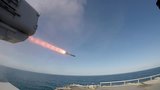
![Australia’s Mogami-class frigates to feature RTX SeaRAM defence system]()
Australia’s Mogami-class frigates to feature RTX SeaRAM defence system
Under a contract with Mitsubishi Heavy Industries, Raytheon will provide SeaRAM launchers, blast test vehicles and technical services for the Royal Australian Navy’s Sea3000 General Purpose Frigate programme.
-
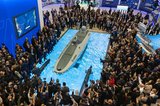
![SAHA 2026: Aselsan seeks to replicate Turkey’s UAV success at sea]()
SAHA 2026: Aselsan seeks to replicate Turkey’s UAV success at sea
Turkey’s defence electronics company has unveiled two new uncrewed naval systems at SAHA 2026 – but the harder test will be converting it into an export success.
-
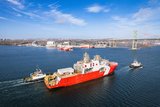
![Canada boosts Arctic presence as CCGS Donjek prepares for sea trials this year]()
Canada boosts Arctic presence as CCGS Donjek prepares for sea trials this year
CCGS Donjek is currently being prepared to start testing and be handed over to the Canadian Coast Guard in the second half of 2026.