Uncrewed fleets emerge as AUKUS nations’ answer to capability interval
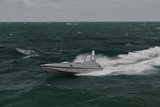
The Kraken USV being piloted in the Solent. (Photo: UK Royal Navy)
While their multibillion-dollar nuclear submarine ambitions move forward at a glacial industrial pace, all three countries are making a swifter bet: fleets of uncrewed vessels that can be built, deployed and iterated in years rather than decades.


Australia, the UK and the US are fielding autonomous maritime platforms to plug capability gaps while long-term submarine programmes face protracted timelines.
Within the space of a single week in March 2026, the three nations that form the AUKUS trilateral security partnership each announced commitments to uncrewed maritime systems.
Australia invested A$176 million (US$125 million) in a fleet of Bluebottle uncrewed surface vessels (USVs) for the Royal Australian Navy (RAN). The UK Royal Navy confirmed a £12.3 million (US$16.4 million) contract for 20 USVs under Project Beehive.
Across the Atlantic, the Defense Innovation Unit (DIU) and the US Navy selected
Already have an account? Log in
Want to keep reading this article?


More from Naval Warfare
-
![What the rise of interoperability between Western allies means for defence procurement]()
What the rise of interoperability between Western allies means for defence procurement
Major naval initiatives including the European Patrol Corvette programmes and Norway’s UK partnership-focused purchase of Type 26 frigates point to the growing interest in the advantages of commonality across allied navies.
-
![Kraken’s Royal Navy USV contract signals next step in crewed-uncrewed integration]()
Kraken’s Royal Navy USV contract signals next step in crewed-uncrewed integration
The UK Royal Navy’s rapid procurement of uncrewed platforms aligns with the force’s strategic shift towards a fleet better equipped to handle modern threats.
-
![HMS Anson’s milestone stay in Australia cut short during AUKUS deployment]()
HMS Anson’s milestone stay in Australia cut short during AUKUS deployment
The Astute-class submarine’s visit to Australia was the first time maintenance activity on a UK Royal Navy nuclear submarine had been carried out in the country.