SOF Week 2026: US Navy USV completes record eight-day autonomous mission
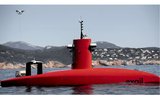
USN T38 Devil Ray USV. (Photo: MARTAC)
The MARTAC T38 Devil Ray USV has set a new endurance benchmark as the US Navy pushes deeper into autonomous maritime warfare.


The US Navy (USN) has recently completed a record-setting eight-day fully autonomous mission using the Maritime Tactical Systems (MARTAC) T38 Devil Ray uncrewed surface vessel (USV). This step marked a major milestone in the Pentagon’s push towards persistent autonomous operations in contested maritime environments.
The T38 deployment, conducted by the Naval Air Warfare Center Weapons Division’s (NAWCWD) Point Mugu Sea Range, took place off the coast of California. During the trials, the platform operated continuously for 192h without onboard personnel, chase boats or escort support.
The vessel travelled around 400nml into the Pacific Ocean, performed extended station-keeping and autonomously returned to
Our news & analysis is now part of Defence Insight®
A Basic-level or higher Defence Insight subscription is now required to view this content.


More from Naval Warfare
-
![Baltic naval priorities shift towards mine warfare and versatile platforms]()
Baltic naval priorities shift towards mine warfare and versatile platforms
Baltic states are investing in mine warfare, uncrewed systems and multirole platforms as major warship purchases remain scarce, industry sources indicate.
-
![India’s mine countermeasure drive triggers rush of new partnerships]()
India’s mine countermeasure drive triggers rush of new partnerships
Parallel procurement pathways for crewed mine countermeasure vessels and uncrewed systems underline a shift towards next-generation mine warfare for the Indian Navy.
-
![Finland’s naval sector eyes growth opportunities in NATO era]()
Finland’s naval sector eyes growth opportunities in NATO era
Finland’s naval industrial base is expanding as NATO membership, Baltic Sea security concerns and proximity to Russia push shipbuilders and equipment makers to capture new roles.
-
![Force renewal in the Royal Canadian Navy opens long-term opportunities for suppliers]()
Force renewal in the Royal Canadian Navy opens long-term opportunities for suppliers
Canada's ambitious naval modernisation plans are creating major maritime procurement opportunities, with future programmes also promising long-term work for domestic and international shipbuilders.