SAHA 2026: Turkey markets modular undersea systems to European buyers
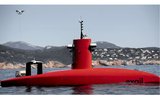
The Multi-Purpose Mini Submarine, certified by Türk Loydu, successfully finished its initial uncrewed dive tests off the coast of Karamürsel in April 2026. (Photo: Datum AŞ)
Turkey’s defence industry is pushing a class of platform and building an entire philosophy of cost-imposition around it.


At SAHA 2026 in Istanbul, the cumulative weight of Turkey’s subsurface announcements pointed in a clear direction: cheap ways to combat expensive things at sea, delivered from platforms small enough to move by truck.
The clearest expression of that came not from one of Turkey’s established primes, but from Datum AŞ, an Istanbul Technical University-partnered underwater technologies firm which unveiled Turkey’s first indigenous mini-submarine at the show.
The Multi-Purpose Mini Submarine, which completed its initial uncrewed dive tests off the coast of Karamürsel on 14 April 2026, is certified by Türk Loydu and carries a localisation rate exceeding 80%. Its
Our news & analysis is now part of Defence Insight®
A Basic-level or higher Defence Insight subscription is now required to view this content.


More from Naval Warfare
-
![Baltic naval priorities shift towards mine warfare and versatile platforms]()
Baltic naval priorities shift towards mine warfare and versatile platforms
Baltic states are investing in mine warfare, uncrewed systems and multirole platforms as major warship purchases remain scarce, industry sources indicate.
-
![India’s mine countermeasure drive triggers rush of new partnerships]()
India’s mine countermeasure drive triggers rush of new partnerships
Parallel procurement pathways for crewed mine countermeasure vessels and uncrewed systems underline a shift towards next-generation mine warfare for the Indian Navy.
-
![Finland’s naval sector eyes growth opportunities in NATO era]()
Finland’s naval sector eyes growth opportunities in NATO era
Finland’s naval industrial base is expanding as NATO membership, Baltic Sea security concerns and proximity to Russia push shipbuilders and equipment makers to capture new roles.
-
![Force renewal in the Royal Canadian Navy opens long-term opportunities for suppliers]()
Force renewal in the Royal Canadian Navy opens long-term opportunities for suppliers
Canada's ambitious naval modernisation plans are creating major maritime procurement opportunities, with future programmes also promising long-term work for domestic and international shipbuilders.