Remus 300 joins USN Program of Record
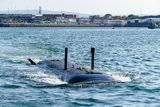
The Remus 300 small UUV. (Photo: HII)
Remus 300 has been selected to join the USN Small UUV Program of Record.


The Remus 300 unmanned underwater vehicle (UUV) has become a Program of Record (POR) with the USN, manufacturer Huntington Ingalls Industries (HII) announced on 30 March.
Remus 300 technology is involved in the USN next-generation Small UUV (SUUV) POR. The initial phase of the programme includes the production and testing of the UUVs over the next 12 months.
Designed with an open architecture approach, the modular and compact Remus 300 is intended to advance distributed maritime operations by conducting critical underwater missions.
The SUUV programme (also known as Lionfish) includes the MK18 Mod 1 Swordfish that also uses Remus technology.
The selection of the Remus 300 followed a two-year rapid prototyping effort involving multiple user evaluations and spiral developments to refine the design of the SUUV.
The DoD Defense Innovation Unit facilitated the acquisition via the Other Transaction Authority mechanism.



More from Naval Warfare
-
![Israeli Navy looks to expand as war reshapes future force requirements]()
Israeli Navy looks to expand as war reshapes future force requirements
Israel’s navy is preparing for a larger and more technically diverse role, but its ambitions could be impacted by supply chain restrictions, accelerating demand for domestic naval production as well as autonomous maritime capabilities.
-
![Competitive P17B tender marks a shift in Indian Navy frigate procurement]()
Competitive P17B tender marks a shift in Indian Navy frigate procurement
The Indian Navy's P17B programme is expected to combine greater weapons capacity with a competitive domestic construction model, although key systems could remain dependent on international supply chains.
-
![How France’s SNLE 3G programme is reshaping the naval nuclear industrial base]()
How France’s SNLE 3G programme is reshaping the naval nuclear industrial base
Extending far beyond a four-submarine replacement programme, France’s ballistic missile submarine effort is a decades-long industrial initiative designed to preserve the country’s ability to build and sustain nuclear-powered strategic platforms.
-
![China’s mineral processing dominance exposes naval supply chain vulnerabilities]()
China’s mineral processing dominance exposes naval supply chain vulnerabilities
Competition for critical minerals, and China’s dominance of their processing, is emerging as a decisive factor in future naval procurement programmes.