Qatar gets first coast guard vessels


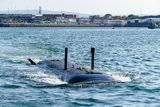
Qatar’s coast guard has received the first of 17 composite hull boats from the Ares Shipyard in Antalya, Turkey.
The vessels, two Ares 75 and one Ares 110 Hercules, are part of a shipbuilding programme that will see five different sizes of craft built: five 24m Ares 75 Hercules, ten 34.5m Ares 110 Hercules, and two 48m Ares 150 Hercules boats.
Rolls-Royce is supplying a total of 46 engines and waterjets for the vessels. The Ares 75 and 110 Hercules vessels are powered by MTU 12V 2000M84 diesel engines with Rolls-Royce Kamewa 50A3 series waterjets. The two largest craft, the 47m Ares 150 Hercules design, will each feature three MTU Series 4000 diesels and twin 71S4 water jets with B4 boosters.
Two further vessels are due for delivery by the end of 2016. Preparations for the construction of the first Ares 150 class boat have already been completed and its launch is expected towards the end of 2017.
Kerim Kalafatoğlu, chairman and executive director of Ares Shipyard, said: ‘The performances of the first Ares 75 and 110 Hercules have been higher than expected or required by the specifications, and have benefitted from the combination of the most advanced ship building techniques, modern equipment and systems, and advanced composite materials with Rolls-Royce power and propulsion.’
Related Equipment in Defence Insight

More from Naval Warfare
-
![Five years on: where could opportunities emerge next for AUKUS Pillar II?]()
Five years on: where could opportunities emerge next for AUKUS Pillar II?
Payload commonality, combat systems and electronic warfare are emerging as likely priorities as the trilateral partnership balances building submarines with sharing industrial ecosystems.
-
![From the Baltic to the Gulf: where USV procurement is heading next]()
From the Baltic to the Gulf: where USV procurement is heading next
Saildrone’s new Copenhagen base is one sign of a larger shift, as navies globally turn to uncrewed vessels for surveillance and mine clearance.
-
![Quantum sensing gathers pace as navies eye undersea advantage]()
Quantum sensing gathers pace as navies eye undersea advantage
As AI dominates defence conversations, industry increasingly points to quantum sensing as the technology set to change submarine and uncrewed underwater vehicle operations.