Naval Group launches Alsace FREMM frigate
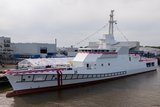
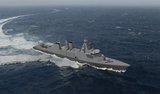
Naval Group has launched the first of two FREMM frigates with reinforced air defence capabilities being built for the French Navy at its shipyard in Lorient, France.
With a length of 142m, Alsace has a displacement of 6,000t and can achieve a maximum speed of 27kt. The vessel can accommodate 119 personnel (+ 14 for the helicopter crew).
The vessel is equipped with the multifunction Herakles radar, Aster 15, 30 and Excocet MM 40 missiles, the MU 90 torpedo, reinforced radar and communication capabilities, optimised mast, and the SETIS combat management system with specific anti-air defense functions.
The frigate will provide air defence support to the French Navy’s Charles de Gaulle aircraft-carrier within an aero-naval or amphibious group.
Naval Group is on contract to deliver the two anti-air defence frigates Alsace and Lorraine, in 2021 and 2022.


More from Naval Warfare
-
![Five years on: where could opportunities emerge next for AUKUS Pillar II?]()
Five years on: where could opportunities emerge next for AUKUS Pillar II?
Payload commonality, combat systems and electronic warfare are emerging as likely priorities as the trilateral partnership balances building submarines with sharing industrial ecosystems.
-
![Singapore expands maritime presence with future-ready Sentinel OPV]()
Singapore expands maritime presence with future-ready Sentinel OPV
Singapore is building space for uncrewed systems and future technologies into its new Sentinel-class OPVs, reflecting a wider move towards adaptable vessels capable of maintaining persistent maritime presence.
-
![From the Baltic to the Gulf: where USV procurement is heading next]()
From the Baltic to the Gulf: where USV procurement is heading next
Saildrone’s new Copenhagen base is one sign of a larger shift, as navies globally turn to uncrewed vessels for surveillance and mine clearance.
-
![Israeli Navy looks to expand as war reshapes future force requirements]()
Israeli Navy looks to expand as war reshapes future force requirements
Israel’s navy is preparing for a larger and more technically diverse role, but its ambitions could be impacted by supply chain restrictions, accelerating demand for domestic naval production as well as autonomous maritime capabilities.
-
![Quantum sensing gathers pace as navies eye undersea advantage]()
Quantum sensing gathers pace as navies eye undersea advantage
As AI dominates defence conversations, industry increasingly points to quantum sensing as the technology set to change submarine and uncrewed underwater vehicle operations.