L3Harris Technologies awarded $212 million contract for Royal Australian Navy’s maritime underwater tracking ranges
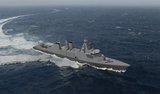
The new ranges will test and evaluate the readiness of platforms and their weapon systems, such as the future Hunter Class. (Image: BAE Systems)
L3Harris Technologies has been awarded a contract valued at A$328 million ($212 million) for the delivery of new Maritime Underwater Tracking Ranges (MUTR) to the Royal Australian Navy as part of SEA1350 Phase 3.


The SEA1350 Phase 3 MUTR programme will provide undersea warfare support including a sub-surface tracking capability to aid current and future Australian Defence Force assets, warfighting tactics and proficiency. This programme also enables sovereign readiness by safeguarding Australia’s maritime approaches and sea lines of communication.
Under the original tender, the solution was to cover a deepwater tracking range, a shallow water tracking range and a deployable tracking range, in a single or multiple arrangement, as well as the associated support mechanisms required to sustain the capability until 2045.
Through a series of sensors, the tracking ranges will capture and relay information on the location and movement of assets that are operating within the tracking field. The MUTR will facilitate exercises in deep ocean and littoral waters, involving surface and sub-surface assets simultaneously.
The ranges are integral to the RAN being able to test and evaluate the readiness of platforms and their weapon systems, especially in support of Australia’s strategic shipbuilding programme.
L3Harris will build the MUTR in Western Australia and will provide the RAN with sub-surface tracking capability and optimised preparedness. The MUTR will support Australia’s emphasis on anti-submarine warfare capability and enable littoral test and evaluation enhancements through the next decade.


More from Naval Warfare
-
![Denmark’s air defence frigate requirement draws growing European competition]()
Denmark’s air defence frigate requirement draws growing European competition
With no formal competition under way, industrial partnerships, production capacity and air defence capability could all shape the programme as Denmark considers how to replace its three Iver Huitfeldt-class frigates.
-
![Singapore expands maritime presence with future-ready Sentinel OPV]()
Singapore expands maritime presence with future-ready Sentinel OPV
Singapore is building space for uncrewed systems and future technologies into its new Sentinel-class OPVs, reflecting a wider move towards adaptable vessels capable of maintaining persistent maritime presence.
-
![From the Baltic to the Gulf: where USV procurement is heading next]()
From the Baltic to the Gulf: where USV procurement is heading next
Saildrone’s new Copenhagen base is one sign of a larger shift, as navies globally turn to uncrewed vessels for surveillance and mine clearance.