Iran and the future of amphibious operations: crewed and uncrewed solutions
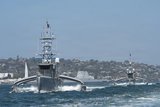
Squire is an autonomous uncrewed surface and aerial vehicle being developed by REGENT. (Photo: REGENT)
Amphibious operations are a very unique type of military operation, and global defence industries are developing new solutions to enhance capabilities and efficiency.


Thousands of US Marines from the 11th and 31st Expeditionary Units are currently en route to the Middle East aboard US warships, in addition to the 82nd Airborne Division. It is believed there is a strong possibility that the US government could carry out a ground operation in Iran, including Kharg Island, to reopen the Strait of Hormuz.
This hypothetical operation would include an amphibious component. While landing craft will continue to be used for beach landings, there are emerging technologies, both crewed and uncrewed, to support troops.
In January, Adm Daryl Caudle, the US Navy’s (USN) chief
Already have an account? Log in
Want to keep reading this article?

More from Naval Warfare
-
![US Navy to acquire and test uncrewed surface vessel prototypes by the end of FY2026]()
US Navy to acquire and test uncrewed surface vessel prototypes by the end of FY2026
The new autonomous surface vessels are planned to be operationally fielded in FY2027, following the completion of on-water trials.
-
![Hanwha Ocean and TKMS are firming up their Canadian next-gen submarine proposals]()
Hanwha Ocean and TKMS are firming up their Canadian next-gen submarine proposals
CPSP competitors are proposing platforms fitted with advanced, next-generation capabilities to be built and sustained in cooperation with the Canadian industry.
-
![Uncrewed fleets emerge as AUKUS nations’ answer to capability interval]()
Uncrewed fleets emerge as AUKUS nations’ answer to capability interval
While their multibillion-dollar nuclear submarine ambitions move forward at a glacial industrial pace, all three countries are making a swifter bet: fleets of uncrewed vessels that can be built, deployed and iterated in years rather than decades.