Indian Coast Guard’s first L&T-built OPV is launched


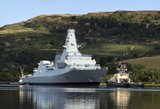
Larsen and Toubro (L&T) has launched the first of seven offshore patrol vessels (OPV) for the Indian Coast Guard, the company announced on 27 October.
L&T is confident that the vessel named Vikram will be handed over to the Indian Coast Guard ahead of the March 2018 delivery schedule after undergoing the process of fitting out and sea trials.
L&T was awarded a $220.58 million contract by the Indian Ministry of Defence in March 2015 to design and build the seven OPVs.
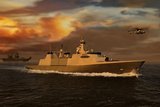
The OPVs are long-range surface ships, capable of operations in the maritime zones of India, including its far island territories, and they also have helicopter operation capabilities. They will be deployed for coastal and offshore patrol, policing maritime zones, control and surveillance, anti-smuggling and anti-piracy with limited wartime roles.
Measuring 97m long, 15m wide, with a 3.6m draught and 2,140t displacement with a range of 5,000nm, the OPVs can attain sustained speeds of up to 26kt. The entire design and construction processes have undergone dual certification from the American Bureau of Shipping and Indian Registrar of Shipping.

More from Naval Warfare
-
![UK Royal Navy shifts focus from warships to system-led warfare]()
UK Royal Navy shifts focus from warships to system-led warfare
With a revised Defence Investment Plan on the way ahead of the upcoming NATO Summit on 7-8 July, the UK government has begun to reveal more details of how its future naval fleet could look.
-
![UK’s Type 31 frigate balances cost pressure with long-term export ambition]()
UK’s Type 31 frigate balances cost pressure with long-term export ambition
The UK shipbuilder’s full-year results to the end of March revealed the impact of the £140 million charge linked to design changes and rework on the Royal Navy’s Type 31 frigate programme.
-
![US Navy expands non-standard acquisitions to rapidly field emerging technologies]()
US Navy expands non-standard acquisitions to rapidly field emerging technologies
The US Navy is increasing the use of OTA obligations to accelerate the procurement of seabed-subsea, littoral, expeditionary and uncrewed solutions.
-
![Can Portugal solve NATO’s uncrewed systems development challenge?]()
Can Portugal solve NATO’s uncrewed systems development challenge?
NATO has spent more than a decade building one of the world’s most sophisticated maritime uncrewed experimentation ecosystems, but still lacks a way to translate this testing into alliance-wide operational capability. Portugal now believes it has the answer.