How will SAFE shape naval procurement for Canada and its highest-receiving members?
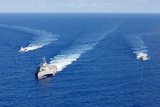
The Royal Canadian Navy currently operates four second-hand Victoria-class SSKs, which will be replaced under the CPSP. (Photo: John Narewski/US Navy)
Canada’s inclusion on the EU’s Security Action for Europe initiative is set to enhance the country’s defence procurement strategy with important implications for some of its naval programmes, while Poland and Romania have also secured significant SAFE funding.


On 1 December, Canada announced it had officially been accepted into the Security Action for Europe (SAFE) programme, which seeks to provide financial support for European member states to increase the pace of defence readiness and support the European defence industry.
While Canada cannot be a member state of the programme due to not being in the EU, it is now able to participate in the common procurement with other member states from SAFE loans. Both Canada and the UK were negotiating to join the initiative, but talks with the UK have stalled over the cost of buying into SAFE.
Already have an account? Log in
Want to keep reading this article?


More from Naval Warfare
-
![Maritime defence in the Mediterranean faces challenges from vulnerable land power]()
Maritime defence in the Mediterranean faces challenges from vulnerable land power
As an indispensable energy crossroads, the Mediterranean is at serious risk from grey zone disruption. As navies increasingly employ AI data centres, what happens when cutting-edge defence technologies rely on the very infrastructure most susceptible to hybrid tactics?
-
![US Navy to conduct an experimentation campaign with emerging tech in 2026 and 2027]()
US Navy to conduct an experimentation campaign with emerging tech in 2026 and 2027
The Technology Operational Experimentation Events will inform future requirements as the US Navy looks for innovative solutions across three key operational domains.
-
![US Navy to acquire micro-uncrewed underwater vehicles for ISR and coastal data collection]()
US Navy to acquire micro-uncrewed underwater vehicles for ISR and coastal data collection
The Naval Supply Systems Command is seeking authorised resellers of JaiaBot uncrewed underwater vehicles and multivehicle pods. The platforms will support undergraduate education at the US Naval Academy.
-
![NATO tests use of “undetectable, jam-proof” laser communication in maritime scenarios]()
NATO tests use of “undetectable, jam-proof” laser communication in maritime scenarios
As part of its effort to better prepare its capabilities for operations in contested and congested scenarios, NATO evaluated a Lithuanian ship-to-ship terminal designed to not be susceptible to enemy interference.