How China’s naval advancements are pushing the US Navy to innovate
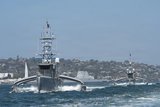
USN Stiletto programme demonstrator. (Photo: US Navy)
The US Navy is set to invest $30 billion in artificial intelligence, cyber, space and autonomy research and development efforts in FY2026 as the force rethinks how it fights in light of China’s naval rise.


The rapid improvement of Chinese naval capabilities and the growth of Beijing’s maritime industry have been pressing the US Navy (USN) towards investing in innovation by acquiring and developing a host of new capabilities while upgrading its in-service inventory.
In FY2026, the branch allocated nearly $30 billion to fund basic and applied scientific research and development, as well as test and evaluation efforts related to new, cutting-edge artificial intelligence (AI), cyber, space and autonomy technologies.
Speaking last week at the 2026 Surface Navy Association National Symposium, John C Phelan, the Secretary of the Navy, noted that the US’s adversaries “are quickly
Already have an account? Log in
Want to keep reading this article?


More from Naval Warfare
-
![Iran and the future of amphibious operations: crewed and uncrewed solutions]()
Iran and the future of amphibious operations: crewed and uncrewed solutions
Amphibious operations are a very unique type of military operation, and global defence industries are developing new solutions to enhance capabilities and efficiency.
-
![US Navy to acquire and test uncrewed surface vessel prototypes by the end of FY2026]()
US Navy to acquire and test uncrewed surface vessel prototypes by the end of FY2026
The new autonomous surface vessels are planned to be operationally fielded in FY2027, following the completion of on-water trials.
-
![Hanwha Ocean and TKMS are firming up their Canadian next-gen submarine proposals]()
Hanwha Ocean and TKMS are firming up their Canadian next-gen submarine proposals
CPSP competitors are proposing platforms fitted with advanced, next-generation capabilities to be built and sustained in cooperation with the Canadian industry.