Escribano Sentinel RWS pass Peruvian Navy acceptance tests
Escribano's Sentinel 2.0 RWS. (Photo: Escribano.)
Spain’s Escribano has equipped Peru’s maritime patrol vessels with its Sentinel 2.0 and Sentinel 30 RWS.


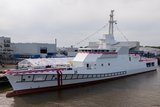
Escribano’s Sentinel 2.0 and Sentinel 30 RWS are now operational onboard Peruvian Navy patrol boats PPMM 208 BAP Río Tumbes and PPMM 209 Río Locumba, following successful acceptance tests.
Sentinel 2.0 uses Browning 12.7mm calibre heavy machine guns and is equipped with an IR camera, standard camera and laser rangefinder.
Sentinel 30 can mount a 30mm cannon, such as the MK44S Bushmaster II, and can be adapted to fit a 40mm weapon.
Both stations are controlled by a single operator remotely using a console inside the vessel. The weapons are capable of automatic target tracking.
Both systems are standalone solutions but can be integrated into the ship’s combat, navigation or data system.
Sentinel 2.0 is fitted to the Spanish Navy’s landing helicopter dock, Juan Carlos. Sentinel 30 is set to be integrated onto Spain’s Serviola-class patrol vessels.
Related Equipment in Defence Insight

More from Naval Warfare
-
![Five years on: where could opportunities emerge next for AUKUS Pillar II?]()
Five years on: where could opportunities emerge next for AUKUS Pillar II?
Payload commonality, combat systems and electronic warfare are emerging as likely priorities as the trilateral partnership balances building submarines with sharing industrial ecosystems.
-
![Singapore expands maritime presence with future-ready Sentinel OPV]()
Singapore expands maritime presence with future-ready Sentinel OPV
Singapore is building space for uncrewed systems and future technologies into its new Sentinel-class OPVs, reflecting a wider move towards adaptable vessels capable of maintaining persistent maritime presence.
-
![From the Baltic to the Gulf: where USV procurement is heading next]()
From the Baltic to the Gulf: where USV procurement is heading next
Saildrone’s new Copenhagen base is one sign of a larger shift, as navies globally turn to uncrewed vessels for surveillance and mine clearance.
-
![Israeli Navy looks to expand as war reshapes future force requirements]()
Israeli Navy looks to expand as war reshapes future force requirements
Israel’s navy is preparing for a larger and more technically diverse role, but its ambitions could be impacted by supply chain restrictions, accelerating demand for domestic naval production as well as autonomous maritime capabilities.
-
![Quantum sensing gathers pace as navies eye undersea advantage]()
Quantum sensing gathers pace as navies eye undersea advantage
As AI dominates defence conversations, industry increasingly points to quantum sensing as the technology set to change submarine and uncrewed underwater vehicle operations.