World Defense Show 2026 to unite global and local innovation
WDS CEO Andrew Pearcey has said that he is keen to see uncrewed systems be a point of differentiation for the Saudi Arabian show. (Photo: WDS)
Saudi Arabia’s showpiece event for the defence industry will return in 2026 as it attempts to foster global defence collaboration, promote opportunity within the Kingdom and demonstrate technological innovation from across the Middle East.


World Defense Show (WDS) will return to Saudi Arabia in 2026, expanding its focus on fostering global defence collaboration, while supporting Saudi Arabia’s ambitious localisation goals.
“At the core of the show is Saudi Arabia Vision 2030 and the 50% localisation target, so everything we do revolves around that,” explained Andrew Pearcey, CEO of WDS, who spoke to Shephard during IDEX 2025 in Abu Dhabi last month.
The introduction of the Saudi Supply Chain Zone will offer smaller and medium-sized companies a dedicated platform on which they can showcase their capabilities, acting as a conduit for local enterprises to integrate more effectively into the global defence supply chain.
Related Articles
World Defense Show 2024: Leonardo and Saudi Arabia to explore defence solutions together
World Defence Show 2024: Saudi Arabia exploring A330 and A400M tanker deals with Airbus
“This specific area will allow small- and medium-sized Saudi Arabian companies to showcase what they can do,” Pearcey added.
Technology will be at the forefront of the event, with the new Future Defense Lab highlighting advancements in artificial intelligence (AI), uncrewed systems and space-related technologies.
“We intend to showcase AI and really give it meaning at the show, [demonstrating] how AI can be applied, rather than just talking about it,” Pearcey remarked. The 2026 event will aim to provide practical demonstrations of AI, rather than theoretical discussions, helping defence professionals grasp the real-world applications of emerging innovations.
“Unmanned systems is a big thing for the show as well,” Pearcey added, noting that the event will also feature an Unmanned System Zone. “Our location in the desert means we have a runway and I really want unmanned systems to be a point of differentiation for the show.”
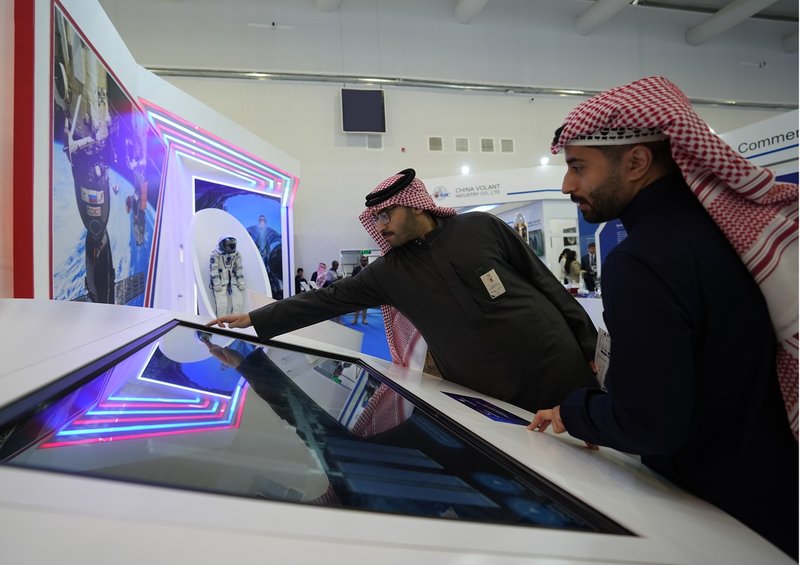
An expansion in international participation is also on the cards for 2026, with new exhibitors confirmed from Japan, Malaysia, Thailand, Finland, Kazakhstan and Uzbekistan. Additionally, the event’s matchmaking initiatives between startups and investors will offer innovation-driven companies the opportunity to gain visibility and secure partnerships within Saudi Arabia, led primarily by the event’s Meet the KSA Government Program.
Driven by the 2026 theme of “The Future of Defense Integration”, WDS will place an emphasis on the integration of cutting-edge technologies across all defence domains, while offering insight on how to navigate the complexities of Saudi Arabia’s defence market.
“We’re very much grounded in wanting to showcase the latest technology,” Pearcey noted,
Alongside traditional focuses of land and air equipment, the show will also support the space and naval domains, with the new naval zone providing insight into maritime defence advancements. Meanwhile, space-related discussions and exhibits will be embedded within the Future Defense Lab, highlighting how space capabilities are becoming integral to defence operations.
“The space domain went down really well last year, and I think space is becoming more informed within defence – it’s becoming a natural domain for us to talk about,” Pearcey concluded.


More from Land Warfare
-
![NATO looks for answers to overcome standards hurdles and improve procurement]()
NATO looks for answers to overcome standards hurdles and improve procurement
NATO is looking to artificial intelligence to provide integration between different C2 systems to create a common operational picture, potentially offering a faster route to interoperability than the slow-moving processes of NATO standards committees.
-
![NATO FUSE exercise plays out real-world scenario in the face of eastern border risks]()
NATO FUSE exercise plays out real-world scenario in the face of eastern border risks
The large-scale exercise in Latvia was the culmination of three experimentation initiatives to see how platforms, weapons and systems could fit into the alliance’s Eastern Flank Deterrence Initiative. As well as forces, it brought together companies and equipment.
-
![Canada accelerates uncrewed aerial system procurement for NATO and Arctic forces]()
Canada accelerates uncrewed aerial system procurement for NATO and Arctic forces
Canada plans to acquire at least 120 uncrewed aerial systems through two competitions with combined funding ceilings of C$32 million.
-
![October land forces roundup: AUSA dominates as list narrows for new British Army vehicle]()
October land forces roundup: AUSA dominates as list narrows for new British Army vehicle
New counter-drone technologies, autonomous launchers and manufacturing modernisation initiatives highlighted emerging opportunities for defence suppliers, while the UK advanced a major military vehicle procurement programme.