US Army modernisation plans raise big concerns for lawmakers
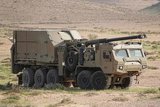
Joint Light Tactical Vehicles. (Photo: US Army)
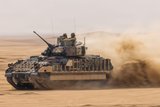
The termination of programmes such as JLTV and RCV has been harshly criticised by members of the US Congress.


The implementation of the US Army Transformation Initiative (ATI) has been receiving criticism from Congress. Although it is intended to better prepare the service’s soldiers and inventory for tomorrow’s warfare, lawmakers have warned that this approach could negatively impact the national industry and the branch’s readiness.
The concerns relate to terminating multiple modernisation and acquisition programmes that the branch now considers outdated, late-to-market, overpriced, or difficult to maintain.
“Pursuing generational change on the cheap is risky business,” Mitch McConnell, chair of the Senate Subcommittee on Defence and Republican Senator from Kentucky, stated during a hearing early this month.
“My view
Our news & analysis is now part of Defence Insight®
A Basic-level or higher Defence Insight subscription is now required to view this content.




More from Land Warfare
-
![Singapore confirms fully automated SIGMA SPH as new precision-strike system emerges]()
Singapore confirms fully automated SIGMA SPH as new precision-strike system emerges
Singapore has confirmed plans to introduce a fully automated howitzer alongside an emerging precision-strike capability whose weapon type and deployment status have not been disclosed.
-
![The US DoD’s counter-drone marketplace begins to produce results]()
The US DoD’s counter-drone marketplace begins to produce results
The Pentagon's push to accelerate counter-drone procurement is opening new opportunities for defence companies as it seeks to bring emerging technologies into operational service more quickly.
-
![AUSA 2026: Hanwha receives howitzer top-up order to meet US Army’s fast delivery demand]()
AUSA 2026: Hanwha receives howitzer top-up order to meet US Army’s fast delivery demand
Less than two months after winning a contract from the US Army for six prototype K9 mobile howitzers, Hanwha Defense USA has received an order for another three. The company will show a platform at AUSA 2026.
-
![AUSA 2026 preview: Uncrewed systems and platforms to defend against them set to feature]()
AUSA 2026 preview: Uncrewed systems and platforms to defend against them set to feature
The Association of the US Army’s flagship conference and exhibition takes place in Washington, DC from 12 to 14 October. Shephard takes a look at what might be in store at the 2026 show, with uncrewed and counter-uncrewed systems and platforms under the spotlight.
-
![“A survivable architecture”: why resilient communications are no longer a luxury]()
“A survivable architecture”: why resilient communications are no longer a luxury
In Conversation… Military communications must adapt to a rapidly evolving battlespace, characterised by decentralised forces and an increasingly contested electromagnetic spectrum. To survive and thrive, it is vital to prioritise resilient systems and networks, Faisal Munir, President – Mission-Critical Communications at L3Harris Technologies, told Shephard’s Gerrard Cowan.