


Companies downselected for British Army vehicle programme
It is believed that three companies did not make the downselect but a dark horse in Spain’s Iturri is believed to have got through.


The US Army has selected DRS and BAE Systems for the three-year engineering and manufacturing development (EMD) phase of the Joint Effects Targeting System (JETS) programme. The companies will develop Target Location Designation System (TLDS) prototypes under the contracts, worth $15 million each.
Systems delivered as part of the JETS programme will provide the dismounted forward observer and Joint Terminal Attack Controllers the ability to acquire, locate and mark for precision Global Positioning System-guided and laser-guided munitions. The TLDS component of this system will provide the dismounted forward observer with a common and light-weight handheld precision targeting capability.
The JETS programme is led by the US Army but is a joint interest programme with the US Air Force and Marine Corps.
BAE Systems is offering its new Handheld Azimuth Measuring, Marking, Electro-optic imaging & Ranging (HAMMER) precision targeting system under its $15 million contract. HAMMER allows dismounted combat operators to locate and mark targets in all weather and lighting conditions, and was developed to support the missions of today’s warfighter while significantly reducing collateral damage and friendly fire incidents.
HAMMER builds on the company’s already-fielded Target Reconnaissance Infrared Geolocating Rangefinder (TRIGR) system, and adds enhanced precision targeting capabilities with the addition of a compact laser marker and a non-magnetic compass.
DRS has been awarded $15.5 million for its prototype development. The company said it will offer an integrated design that affordably improves soldier precision targeting capability, but did not offer any further information on its offering.


It is believed that three companies did not make the downselect but a dark horse in Spain’s Iturri is believed to have got through.
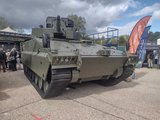
Air defence and counter-drone weapons continue to be developed, tested and demonstrated in anticipation of growing demand, with most solutions designed to be platform-agnostic and readily integrated onto suitable platforms.
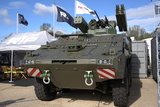
The US Army began its search for a 155mm tracked mobile tactical cannon in an effort that Shephard forecasts could be worth billions of dollars. Meanwhile, the UK DVD exhibition saw companies showcase their offerings for the British Army’s mobility and air defence requirements.

The development demonstrates how the platform could provide additional firepower and growth potential while the US Army progresses its long-term replacement for the Bradley.

FNSS and PT Pindad are progressing the Indonesian tracked armoured personnel carrier programme as local production gets under way.
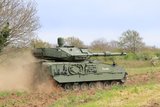
Firing trials of the Tulpar and Leonardo Hitfact Mk II combination follow an integration programme covering mechanical, electrical, electronic and software interfaces.

Connect with us on socials


