


Canada accelerates uncrewed aerial system procurement for NATO and Arctic forces
Canada plans to acquire at least 120 uncrewed aerial systems through two competitions with combined funding ceilings of C$32 million.


Thales has announced that it will co-develop the ELFIE Night Vision Device (NVD) for the Indian armed forces with MKU.
The work will be conducted within the framework of a Memorandum of Understanding signed by the companies in 2018 for strategic co-operation on developing optronic devices.
ELFIE is a lightweight monocular with a wide field of view and night combat capability. It can be used hands-free on a face mask or helmet mount, or weapon-mounted, for left or right eye use. It provides stereoscopic vision in binocular configuration.
The system is designed for vehicle-driving, paratroopers and special forces operators. When mounted on a weapon, it provides a red dot sight or laser pointer to the user.
The device will be developed at MKU’s facility in Kanpur, Uttar Pradesh, with the integration of the first pre-series expected to be complete in the first third of 2020. It will be available from 2021.
Pascale Sourisse, senior executive vice president – international development, Thales, said: ‘We are enthusiastic about taking our strategic association forward with MKU with the co-development of ELFIE.
‘Coming up in the defence industrial corridor of Uttar Pradesh, this versatile night vision device will be offered to the armed forces in India as well as across the world. Together with MKU, we look forward to strengthening the industrial ecosystem while also contributing towards job creation in the country.’


Canada plans to acquire at least 120 uncrewed aerial systems through two competitions with combined funding ceilings of C$32 million.
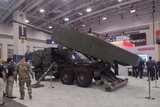
New counter-drone technologies, autonomous launchers and manufacturing modernisation initiatives highlighted emerging opportunities for defence suppliers, while the UK advanced a major military vehicle procurement programme.

Non-US companies are increasingly looking to establish subsidiary and partnerships to access the potential billions of dollars of vehicle and land systems contracts and there has already been some success.

Pearson Engineering has provided equipment and engineering expertise to the Armed Forces of Ukraine since the beginning of the full-scale Russian invasion in 2022. The British company is now working to deepen engagement with the Ukrainian defence industry, expanding its support for the country’s population and laying the foundations for future technological innovation.
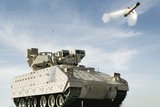
Rather than developing entirely new weapons, defence companies are looking to build on existing weapons and systems to deliver greater capability, control costs and accelerate fielding.

With a production rate of more than 10 million vehicles annually, the US commercial car and vehicle manufacturing base is second only to China. Defence companies are looking at how the vehicles, technology and manufacturing capability can support programmes.

Connect with us on socials


