


FNSS advances Indonesian Kaplan APC programme as local production expands
FNSS and PT Pindad are progressing the Indonesian tracked armoured personnel carrier programme as local production gets under way.


GDELS M3 Amphibious Bridge. (Photo: GDELS)
General Dynamics European Land Systems (GDELS) announced on 30 September that the company have been selected by South Korea to supply 110 M3 amphibious bridging vehicles for the Republic of Korea Army.
The vehicles will be jointly produced with Hanwha Defense Corporation under the Korean Amphibious Bridging Vehicle programme.
A press release from GDELS noted that South Korea will operate the largest M3 fleet in the world with more than 1.3km of bridge length.
It was added that this platform provides load capacity, assembly time and manoeuvrability both on water and land in addition to ‘mobility, availability and seamless land-to-water transition’.
The M3K was chosen in a competitive selection process and competed against the FNSS Armoured Amphibious Assault Bridge (AAAB) from Turkey.
The M3 is already operated by the militaries of Germany, the UK, Taiwan, Singapore and Indonesia.
According to Shephard Defence Insight, the M3 is a self-propelled amphibious bridging vehicle developed from 1982-92 to meet the requirements of the British and German armies.
It is operated by a crew of three and has a maximum road speed of 80km/h. When driven into the water, the M3 is propelled and steered in water by two fully traversable pump jets at speeds of up to 14km/h.

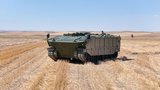
FNSS and PT Pindad are progressing the Indonesian tracked armoured personnel carrier programme as local production gets under way.
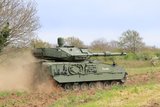
Firing trials of the Tulpar and Leonardo Hitfact Mk II combination follow an integration programme covering mechanical, electrical, electronic and software interfaces.
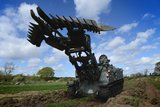
The news from Ukraine has again shown that antitank minefields and other obstacles on the battlefield, such as deep trenches, can play a key role in both offensive and defensive operations. Given this, there will always be a need to clear them, both during and after a conflict.
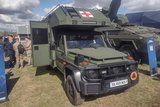
The UK Ministry of Defence has avoided being prescriptive in its search to replace the British Army’s Land Rover, meaning vehicle types being offered range from Land Rover Defender Wolf II and Humvee to the hybrid series Fering Pioneer. What does this mean for the procurement process?

The introduction of Ajax vehicles into British Army service was stopped after operator health issues were reported during an exercise, but manufacturer General Dynamics Land Systems UK believes work over the past 10 months has dealt with the problems.

Sweden, Croatia and France are pursuing different rocket artillery solutions as European armies seek greater reach, survivability and industrial resilience.

Connect with us on socials


