


US Army pursues commercial routes to modernise cannon and mortar manufacturing
Watervliet Arsenal’s digital manufacturing push opens opportunities for industry as the US Army modernises cannon production and its wider Organic Industrial Base.


Omnia Training, a Raytheon UK-led consortium, will provide the British Army with an integrated training system. (Photo: Raytheon UK)
Omnia Training, a consortium of Capita, Cervus, Rheinmetall UK and Skyral led by Raytheon UK, has been awarded a £2 billion (US$2.7 billion) contract by the UK Ministry of Defence to serve as the British Army’s Strategic Training Partner (STP) and deliver the Army Collective Training System (ACTS).
ACTS, previously called Collective Training Transformation Programme (CTTP), is designed to be a substantial overhaul of the force’s training capability and will include an integrated, digitally enabled collective training system.
The system will combine virtual, synthetic and data-driven environments as an upgrade to traditional live exercises to better prepare soldiers for complex,
Our news & analysis is now part of Defence Insight®
A Basic-level or higher Defence Insight subscription is now required to view this content.


Watervliet Arsenal’s digital manufacturing push opens opportunities for industry as the US Army modernises cannon production and its wider Organic Industrial Base.
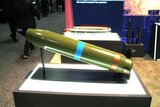
Nammo is developing new artillery ammunition designed to extend firing ranges, combining ramjet propulsion research with conventional, base-bleed and rocket-assisted projectile designs.
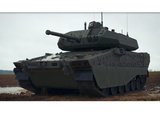
The US Army’s XM30 programme is an ambitious multi-billion-dollar effort to replace Bradley infantry fighting vehicles. American Rheinmetall and General Dynamics Land Systems are fighting for the contract.
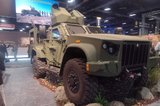
The Joint Light Tactical Vehicle programme for the US Marine Corps appears to be making progress, with AM General increasing production of its version while Oshkosh Defense has secured long-lead materials in anticipation of becoming a second supplier.
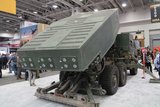
The company's new artillery demonstrator is intended to engage incoming missiles and ground targets, while a separate microwave system focuses on uncrewed aerial threats.
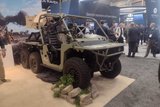
An elevated remote weapon station, radar sensor and 12.7mm machine gun provide the Australian vehicle with a potential mobile counter-drone capability.

Connect with us on socials


