


Europe commits to long-range fires but countries move in different directions
Sweden, Croatia and France are pursuing different rocket artillery solutions as European armies seek greater reach, survivability and industrial resilience.


A Raytheon and DRS Technologies team have received $56 million from the US Army to engineer, develop and manufacture the third-generation, forward-looking infrared (FLIR) night vision B-Kit.
The next-generation system is an upgrade to current night vision equipment, that will give ground troops the ability to discriminate between friend and enemy at twice the distance of current systems. It is a form/fit upgrade to the 17,000 second-generation ground FLIR systems currently in use.
The four-year engineering, manufacturing and development contract will see the companies deliver B-Kit systems for platform system integration and testing. The contract also includes a two-year option to build additional systems for more comprehensive testing.
Duane Gooden, vice president, Raytheon Land Warfare Systems, said: ‘After decades of experience delivering high-performance night vision to the US Army, our team is uniquely qualified to help maintain combat overmatch for our ground troops. Third Gen FLIR will dramatically increase the range of ground combat vehicle sensors under all conditions, allowing our forces to acquire and stop the enemy.’


Sweden, Croatia and France are pursuing different rocket artillery solutions as European armies seek greater reach, survivability and industrial resilience.
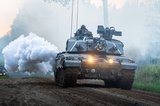
The bilateral agreement between the UK and Estonia comes as both countries explore how dispersed troops, drones, digital targeting, anti-tank weapons and increasingly long-range fires can complement the combat mass traditionally provided by heavy armour.

The Military 850 Voyageur 155 Crossover has secured orders from the US Army, Air Force and Marine Corps, addressing demand for agile Arctic mobility with passenger, cargo and towing capacity.

The Light Mobility Vehicle segment of the UK’s Land Mobility Programme for the British Army may actually be about to make progress, or at least likely bidders seem to think so. Shephard spoke with several contenders who revealed their views on how the army should replace the ageing fleet.
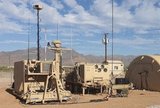
Northrop Grumman’s Integrated Battle Command System is in service with Polish forces and is being introduced to US forces, with further development underway on the original platform as well as a smaller, more mobile system.
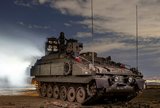
The UK’s plan to introduce a new air defence capability into the British Army will cover short and medium-range defence as well as counter-uncrewed aerial system systems. Timelines are not yet laid out but industry is making plans.

Connect with us on socials


