Ireland targets improved anti-drone capability before mid-year ahead of EU presidency
Ireland’s purchase of C295s is a major part of the country’s procurement plans, along with CUAS systems and radars. (Photo: Airbus)
With Ireland’s EU presidency set to commence from July this year, the ramped-up efforts to procure a counter-uncrewed aerial system and radar capability under its Military Radar Programme are on track to meet targeted roll-out dates.


The Irish government remains on target to be able to provide a counter-uncrewed aerial system (CUAS) during the country’s presidency of the Council of the EU for the final six months of 2026 with a boost to its defence forces.
As part of the presidency, the country will host high-profile visits from EU leaders, with accelerated anti-drone procurement efforts aimed at ensuring protection for dignitaries.
An Irish Department of Defence (DoD) spokesperson told Shephard that CUAS capability is “currently on track to be delivered [to the defence forces] during the first half of this year, including the completion of training”.
Our news & analysis is now part of Defence Insight®
A Basic-level or higher Defence Insight subscription is now required to view this content.


More from Land Warfare
-
![British Army turns to local option for small robot trials]()
British Army turns to local option for small robot trials
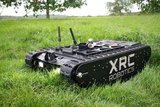
The UK Government has ordered XRC’s small Rhino UGV for trials just weeks after placing a contract for ARX Robotics Gereon tracked UGV which will also be manufactured in the UK. The latest move is another step in creating a force of 40% uncrewed systems.
-
![SOF Week 2026: The Gear Keeping Warfighters Ready in Extreme Climates (Video)]()
SOF Week 2026: The Gear Keeping Warfighters Ready in Extreme Climates (Video)
At SOF Week 2026, Pro-Shot Defense discusses the maintenance technologies and weapon support tools designed to keep special operations forces mission ready in the world’s harshest environments.
-
![Sweden looks to commercial world to meet military UGV needs]()
Sweden looks to commercial world to meet military UGV needs
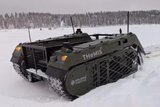
Stockholm is exploring commercial avenues to provide a small uncrewed ground vehicle capable of carrying 500kg with a focus on challenging terrains and C2 systems.
-
![Are counter-drone systems for dismounted troops emerging as the next procurement battle?]()
Are counter-drone systems for dismounted troops emerging as the next procurement battle?
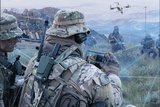
As uncrewed aerial systems and loitering munitions evolve, it is increasingly necessary for counter-uncrewed solutions to keep pace in order to protect not only military facilities and platforms but also dismounted troops.