Eurosatory 2026: Recovery, reconnaissance, autonomy and air defence shape land systems developments
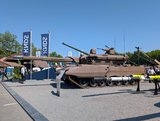
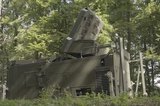
GDELS and FFG’s Piranha Heavy Mission Carrier Advanced Recovery Vehicle is designed to support increasingly heavy wheeled armoured platforms entering service across Europe. (Photo: author)
New recovery vehicles, reconnaissance platforms, autonomous fire-support systems and short-range air-defence capabilities on display at Eurosatory 2026 highlighted how land forces are adapting to evolving battlefield requirements.


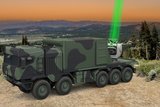
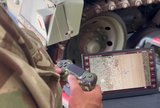
Eurosatory 2026 highlighted several key trends shaping the future of land warfare, including increased emphasis on battlefield support vehicles, networked reconnaissance capabilities, autonomous systems and short-range air defence.
One example was the growing requirement to support increasingly heavy wheeled combat vehicles entering service across Europe.
General Dynamics European Land Systems (GDELS) and German company FFG used the exhibition to showcase the prototype Piranha Heavy Mission Carrier (HMC) Advanced Recovery Vehicle (ARV), developed to support heavy wheeled platforms such as the RCH 155 artillery system.
The Piranha HMC ARV combines the GDELS 10x10 platform with an FFG recovery module previously trialled
Our news & analysis is now part of Defence Insight®
A Basic-level or higher Defence Insight subscription is now required to view this content.

More from Eurosatory 2026
-
![Eurosatory 2026 roundup: uncrewed, counter-uncrewed and new vehicles define direction]()
Eurosatory 2026 roundup: uncrewed, counter-uncrewed and new vehicles define direction
Uncrewed and counter-uncrewed systems were a major feature of this edition of Eurosatory 2026 along with programme updates and first sight of new main battle tanks.
-
![Eurosatory 2026: Iran’s attacks on UAE have “accelerated” Edge’s plans, says company]()
Eurosatory 2026: Iran’s attacks on UAE have “accelerated” Edge’s plans, says company
The UAE’s Edge has undergone massive changes since it was formed in 2019, from acquisitions to partnerships, and has now set up a European division in Paris.
-
![Eurosatory 2026: As MGCS stalls, has Europe’s new MBT been unveiled?]()
Eurosatory 2026: As MGCS stalls, has Europe’s new MBT been unveiled?
Eurosatory 2026 saw a number of main battle tanks on display, including two new platforms which could be the future of European tanks.
-
![Eurosatory 2026: MARSS and parent company EOS expand air defence capability]()
Eurosatory 2026: MARSS and parent company EOS expand air defence capability
MARSS became part of EOS Defence earlier this year, bringing together the former’s C2 NiDAR and Nation Shield air defence products with the latter’s suite of effectors and sensors.
-
![Eurosatory 2026: Wartime iteration gives Ukraine an edge as future UAV exporter]()
Eurosatory 2026: Wartime iteration gives Ukraine an edge as future UAV exporter
As industrial-scale drone production proves its battlefield worth in Ukraine, what happens to that production capacity and knowhow once the guns fall silent – and is Ukraine about to become one of the world’s most credible UAV export partners?
-
![Eurosatory 2026: Pearson Engineering to send AI mine detecting systems into Ukraine]()
Eurosatory 2026: Pearson Engineering to send AI mine detecting systems into Ukraine
Pearson Engineering’s Threat-Sense system is designed to use imaging from drones to geolocate scattered mines and support uncrewed systems in defeating the threats.