Eurosatory 2026: Milrem expands partnerships as it outlines NATO eastern flank defence plans
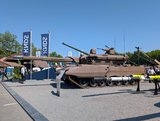
Milrem’s Havoc with a range of add-ons on display at Eurosatory 2026. (Photo: author)
In the past three months Milrem Robotics has signed cooperation agreements with Hanwha, EOS Defence Systems and Polska Grupa Zbrojeniowa (PGZ) and at Eurosatory 2026 with CNIM Systèmes Industriels and Frankenburg Technologies. The deals come as the company develops its Eastern Flank Deterrence Initiative.


Milrem Robotics plans to deliver the first batch of its first Vector large tracked uncrewed ground vehicle (UGV) to launch customer UAE within the next five years, with “some countries who [already] want to buy some units”, company CEO Kuldar Vaarsi told Shephard.
Vaarsi said: “Vector is in delivery phase, so in 2029-30 we will send the first batch to UAE. It is in mobility tests and these are doing really well.”
Vaarsi was speaking at Eurosatory 2026 where the company had signed a Memorandum of Understanding (MoU) with fellow Estonian company Frankenburg Technologies, with a focus on integrating the
Our news & analysis is now part of Defence Insight®
A Basic-level or higher Defence Insight subscription is now required to view this content.




More from Eurosatory 2026
-
![Eurosatory 2026 roundup: uncrewed, counter-uncrewed and new vehicles define direction]()
Eurosatory 2026 roundup: uncrewed, counter-uncrewed and new vehicles define direction
Uncrewed and counter-uncrewed systems were a major feature of this edition of Eurosatory 2026 along with programme updates and first sight of new main battle tanks.
-
![Eurosatory 2026: Iran’s attacks on UAE have “accelerated” Edge’s plans, says company]()
Eurosatory 2026: Iran’s attacks on UAE have “accelerated” Edge’s plans, says company
The UAE’s Edge has undergone massive changes since it was formed in 2019, from acquisitions to partnerships, and has now set up a European division in Paris.
-
![Eurosatory 2026: As MGCS stalls, has Europe’s new MBT been unveiled?]()
Eurosatory 2026: As MGCS stalls, has Europe’s new MBT been unveiled?
Eurosatory 2026 saw a number of main battle tanks on display, including two new platforms which could be the future of European tanks.
-
![Eurosatory 2026: MARSS and parent company EOS expand air defence capability]()
Eurosatory 2026: MARSS and parent company EOS expand air defence capability
MARSS became part of EOS Defence earlier this year, bringing together the former’s C2 NiDAR and Nation Shield air defence products with the latter’s suite of effectors and sensors.
-
![Eurosatory 2026: Wartime iteration gives Ukraine an edge as future UAV exporter]()
Eurosatory 2026: Wartime iteration gives Ukraine an edge as future UAV exporter
As industrial-scale drone production proves its battlefield worth in Ukraine, what happens to that production capacity and knowhow once the guns fall silent – and is Ukraine about to become one of the world’s most credible UAV export partners?
-
![Eurosatory 2026: Pearson Engineering to send AI mine detecting systems into Ukraine]()
Eurosatory 2026: Pearson Engineering to send AI mine detecting systems into Ukraine
Pearson Engineering’s Threat-Sense system is designed to use imaging from drones to geolocate scattered mines and support uncrewed systems in defeating the threats.