


Europe commits to long-range fires but countries move in different directions
Sweden, Croatia and France are pursuing different rocket artillery solutions as European armies seek greater reach, survivability and industrial resilience.


On 15 June BAE Systems and Iveco announced a a strategic teaming arrangement to pursue the US Marine Corps (USMC) Marine Personnel Carrier (MPC) requirement and other opportunities. The licensing agreement covers the local production and further development of the latter’s SuperAV 8x8 amphibious personnel carrier.
The SuperAV was unveiled last year and has been designed from the ground up for the amphibious environment according to Michele Antonucci, Iveco’s director armoured vehicles. Taking in the lessons of earlier designs and the current operational threat the company believes that is able to offer a more survivable vehicle at a lighter weight that retains the necessary characteristics for successful amphibious operations.
Antonucci said that the 25 ton vehicle had survivability on a par with traditional armoured personnel carriers. The SuperAV has a V-shaped hull to deflect blasts and a higher ground clearance to reduce the kinetic force. The vehicle also has two side mounted transmission shafts removing the elements as projectiles from an upwards blast and all the elements of the payload are suspended from the roof further enhancing survivability..
Modelling of the vehicle has so far included operations in up to Sea State Three and the vehicle has been optimised for operation in salt water conditions. The SuperAV would be able to disembark a full ten man USMC squad.
Speaking on behalf of BAE systems Ann Hoholick, VP and GM US combat systems, said that she believed the Iveco design had the edge and that both companies brought a good record of combat vehicle development and amphibious vehicle development to the partnership.
Hoholick said that the company had not yet decided where it would produce the vehicle in the US, but that it would be one of the former United Defense facilities. However, the first vehicle for trials will be assembled at the company’s research facility in Santa Clara research facility.
Iveco is also offering a version of the SuperAV to meet an Italian landing forces requirement for a new vehicle. Antonucci said that for the Italian requirement the vehicle would likely be armed with Oto Melara’s 25mm overhead weapon station.
By Darren Lake, Paris


Sweden, Croatia and France are pursuing different rocket artillery solutions as European armies seek greater reach, survivability and industrial resilience.
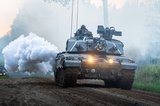
The bilateral agreement between the UK and Estonia comes as both countries explore how dispersed troops, drones, digital targeting, anti-tank weapons and increasingly long-range fires can complement the combat mass traditionally provided by heavy armour.

The Military 850 Voyageur 155 Crossover has secured orders from the US Army, Air Force and Marine Corps, addressing demand for agile Arctic mobility with passenger, cargo and towing capacity.
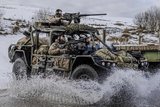
The Light Mobility Vehicle segment of the UK’s Land Mobility Programme for the British Army may actually be about to make progress, or at least likely bidders seem to think so. Shephard spoke with several contenders who revealed their views on how the army should replace the ageing fleet.
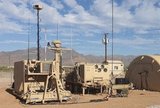
Northrop Grumman’s Integrated Battle Command System is in service with Polish forces and is being introduced to US forces, with further development underway on the original platform as well as a smaller, more mobile system.
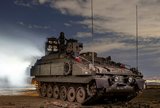
The UK’s plan to introduce a new air defence capability into the British Army will cover short and medium-range defence as well as counter-uncrewed aerial system systems. Timelines are not yet laid out but industry is making plans.

Connect with us on socials


