Clearer military requirements could unlock UGV market growth
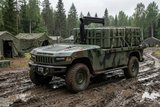
The Termit is a medium UGV developed by Tencore that can be configured for logistics support, CASEVAC and combat operations. (Photo: Tencore)
Western armies continue to test uncrewed ground vehicles, but wider procurement will depend on turning ambitions for autonomy into defined operational roles and funded requirements.


We are, according to some, in the age of autonomy. With uncrewed aerial systems (UAS) integral to modern combat, and uncrewed ground systems (UGVs) now claiming their place in the sun, the next step forward will be ever-higher levels of autonomy. However, there also appears to be a widening gulf between this perception and the reality on the ground.
While UGVs have proven their effectiveness in Ukraine, causing governments around the globe to announce they will start integrating them into their armed forces, actual uptake has been slow and haphazard. Outside of Ukraine and Israel, the adoption of UGVs remains
Our news & analysis is now part of Defence Insight®
A Basic-level or higher Defence Insight subscription is now required to view this content.



More from Land Warfare
-
![Can NATO’s CUAS marketplace turn urgent demand into deliveries?]()
Can NATO’s CUAS marketplace turn urgent demand into deliveries?
Framework contracts and leasing options aim to shorten acquisition timelines, while manufacturing partnerships could help suppliers scale production to meet allied demand.
-
![NATO looks for answers to overcome standards hurdles and improve procurement]()
NATO looks for answers to overcome standards hurdles and improve procurement
NATO is looking to artificial intelligence to provide integration between different C2 systems to create a common operational picture, potentially offering a faster route to interoperability than the slow-moving processes of NATO standards committees.
-
![NATO FUSE exercise plays out real-world scenario in the face of eastern border risks]()
NATO FUSE exercise plays out real-world scenario in the face of eastern border risks
The large-scale exercise in Latvia was the culmination of three experimentation initiatives to see how platforms, weapons and systems could fit into the alliance’s Eastern Flank Deterrence Initiative. As well as forces, it brought together companies and equipment.
-
![October land forces roundup: AUSA dominates as list narrows for new British Army vehicle]()
October land forces roundup: AUSA dominates as list narrows for new British Army vehicle
New counter-drone technologies, autonomous launchers and manufacturing modernisation initiatives highlighted emerging opportunities for defence suppliers, while the UK advanced a major military vehicle procurement programme.