British Army conducts largest ever virtual exercise
The British Army has announced that soldiers from the 2nd Battalion the Royal Welsh completed the army’s largest ever virtual simulation exercise on 30 January.
Exercise Urban Warrior 5 used advanced science and technology as part of a cutting-edge experiment designed to help the army better understand the battlefield of the future.
Using virtual simulation at the Land Warfare Centre in Warminster some 190 soldiers fought various scenarios, with their actions monitored by a sophisticated system of computers and advanced simulation software. All information was collected for further analysis by the Defence Science and Technology Laboratory (Dstl) and Niteworks Partnership who developed the simulation programme.
Brig Simon Deakin, Director Army Force Development, said: “This experiment gives us a unique view into what is required for the British Army to operate successfully on future operations. By testing our soldiers in a number of demanding scenarios we can determine the optimum tactics, equipment and training that are required for us to shape the Army of the future.”
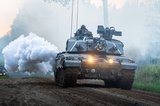
The exercise followed a previous real-life simulation exercise in December 2012 at the Urban Warfare Training Centre in France. soldiers worked with Warrior infantry fighting vehicles and Challenger 2 main battle tanks in a series of realistic battlefield scenarios.
According to the Ministry of Defence, Dstl will now use the data collected to feed a further simulation model, collating results from all of the simulations. The analytical results of this programme, designed by MoD scientists and theNiteworks Partnership, will provide evidence-based advice to the army on the critical capabilities required in order to operate in the future urban battlefield, and the most cost-effective approaches to developing the future force.