AUSA 2019: GDLS, Kongsberg team for Stryker improvements


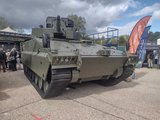
General Dynamics Land Systems has teamed with Kongsberg to jointly pursue the US Army’s next phase of Stryker lethality improvements and production.
The US Army Requirements Oversight Council decided in the spring to apply the 30mm Medium Caliber Weapon System to the Stryker A1. This more mobile and better protected vehicle will serve as the basis for the future Stryker fleet; and the army has decided to outfit three brigades of Double-V Hull Stryker A1 Infantry Carrier Vehicles with the 30mm turrets.
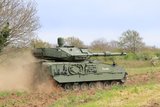
General Dynamics Land Systems and Kongsberg originally developed a Stryker with a 30mm turret for the US Army’s 2nd Cavalry Regiment in Germany under an urgent operational need in 2017. The companies have upgraded the system according to the customer feedback, and will now offer the solution as a lethality improvement to the army’s Stryker fleet.
Related Equipment in Defence Insight


More from Land Warfare
-
![Air defence offerings multiply in anticipation of emerging requirements]()
Air defence offerings multiply in anticipation of emerging requirements
Air defence and counter-drone weapons continue to be developed, tested and demonstrated in anticipation of growing demand, with most solutions designed to be platform-agnostic and readily integrated onto suitable platforms.
-
![Tulpar firing trials expand Hitfact Mk II platform options]()
Tulpar firing trials expand Hitfact Mk II platform options
Firing trials of the Tulpar and Leonardo Hitfact Mk II combination follow an integration programme covering mechanical, electrical, electronic and software interfaces.
-
![How to breach a minefield: from traditional systems to modern techniques in action]()
How to breach a minefield: from traditional systems to modern techniques in action
The news from Ukraine has again shown that antitank minefields and other obstacles on the battlefield, such as deep trenches, can play a key role in both offensive and defensive operations. Given this, there will always be a need to clear them, both during and after a conflict.