


BAE Systems looks beyond the M113 replacement as it tests 30mm AMPV
The development demonstrates how the platform could provide additional firepower and growth potential while the US Army progresses its long-term replacement for the Bradley.


Allen-Vanguard unveiled its latest solutions suite for military vehicle crew survivability today at Canada’s largest defence and security event in support of Canadian and allied forces facing the on-going threat of Improvised Explosive Devices (IEDs).
Featured on display at CANSEC are the Company’s latest advanced solutions to protect vehicle crew with battle-proven technologies including Blast Seats, Electronic Countermeasures, Thermal Management Systems and Blast Sensors.
“We are excited and proud to present the Canadian Forces with advanced solutions for protecting their mounted frontline personnel from IEDs and related threats,” commented Allen-Vanguard CEO, Dennis Morris. “The capabilities and solutions we offer are based on our clear mission focus and deep understanding of the nature of the threats.”
The Company’s industry-leading Blast Seats for drivers, commanders and troops provide superior blast energy attenuation to maximize survivability. Two interactive exhibits, one of which includes the National Research Council’s (NRC) technology demonstrator vehicle, afford members of the crew survivability community and other delegates an opportunity to trial and learn about Allen-Vanguard’s seats for upcoming programs, including CCV, MSVS, LAV III and TAPV. Also on display are other advanced systems integral to Allen-Vanguard’s survivability suite, including:
· the Company’s latest mobile Electronic Countermeasures (ECM) equipment, which jams signals to prevent the detonation of Radio Controlled IEDs and provides additional programmable Electronic Warfare (EW) capabilities;
· a Thermal Management system to cool vehicle crews and their mission-critical electronics; and
· the Company’s novel BlackBIRD blast sensor, a new technology for measuring and collecting vital data about the blast forces acting on a vehicle during an explosive event.
Source: Allen-Vanguard


The development demonstrates how the platform could provide additional firepower and growth potential while the US Army progresses its long-term replacement for the Bradley.
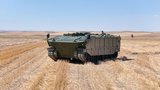
FNSS and PT Pindad are progressing the Indonesian tracked armoured personnel carrier programme as local production gets under way.
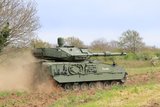
Firing trials of the Tulpar and Leonardo Hitfact Mk II combination follow an integration programme covering mechanical, electrical, electronic and software interfaces.
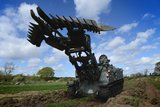
The news from Ukraine has again shown that antitank minefields and other obstacles on the battlefield, such as deep trenches, can play a key role in both offensive and defensive operations. Given this, there will always be a need to clear them, both during and after a conflict.
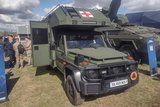
The UK Ministry of Defence has avoided being prescriptive in its search to replace the British Army’s Land Rover, meaning vehicle types being offered range from Land Rover Defender Wolf II and Humvee to the hybrid series Fering Pioneer. What does this mean for the procurement process?

The introduction of Ajax vehicles into British Army service was stopped after operator health issues were reported during an exercise, but manufacturer General Dynamics Land Systems UK believes work over the past 10 months has dealt with the problems.

Connect with us on socials


