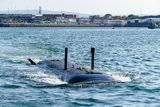
US considers Korean Harpoon sale
The US state department is considering a potential foreign military sale (FMS) to South Korea for UGM-84L Harpoon Block II missiles and associated equipment, parts and logistical support, it was announced on 18 November.
Nineteen UGM-84L Harpoon Block II All-Up-Round missiles and 13 Block II upgrade kits have been requested by the Republic of Korea (ROK), along with containers; Guidance Control Units spares; recertification and reconfiguration support.
The ROK has used sub-launched Harpoon missiles since the 1990s. This request for the Harpoon Block II missiles and support will supplement current weapon inventories and bring the ROK Navy’s anti-surface warfare performance up to existing regional baselines.
The request also includes spare and repair parts; tools and tool sets; support equipment; personnel training and training equipment; publication and technical data; US Government and contractor engineering and logistical support services; and other related elements of logistics support.
If it goes ahead the estimated value of the FMS is estimated at $110 million.


More from Naval Warfare
-
![Five years on: where could opportunities emerge next for AUKUS Pillar II?]()
Five years on: where could opportunities emerge next for AUKUS Pillar II?
Payload commonality, combat systems and electronic warfare are emerging as likely priorities as the trilateral partnership balances building submarines with sharing industrial ecosystems.
-
![From the Baltic to the Gulf: where USV procurement is heading next]()
From the Baltic to the Gulf: where USV procurement is heading next
Saildrone’s new Copenhagen base is one sign of a larger shift, as navies globally turn to uncrewed vessels for surveillance and mine clearance.
-
![Quantum sensing gathers pace as navies eye undersea advantage]()
Quantum sensing gathers pace as navies eye undersea advantage
As AI dominates defence conversations, industry increasingly points to quantum sensing as the technology set to change submarine and uncrewed underwater vehicle operations.