


World Defense Show 2026: Northrop Grumman to present improved C2 management system
The Northrop Grumman Integrated Battle Command System is in service with Poland and the US Army with another 20 countries believed to have expressed an interest.


The Space Tracking and Surveillance System has been active for more than a decade. (Photo: Northrop Grumman)
Northrop Grumman will continue to provide on-orbit operations and sustainment for the Space Tracking and Surveillance System (STSS), under a new $16.02 million contract modification from the US Missile Defense Agency (MDA).
The modification raises the overall value of the STSS contract to $1.96 billion. Northrop Grumman will complete the work by 31 March 2022.
Comprising a pair of low Earth orbit satellites launched in 2009, STSS employs space-based sensors for missile defence.
STSS has ‘proved the operational value of space-based precision mid-course ballistic missile tracking’, according to Northrop Grumman. The system has tracked ballistic missiles through all phases of flight, and in 2013 it demonstrated a ‘launch on remote’ capability with the Aegis weapon system for the USN.
As part of our promise to deliver comprehensive coverage to our Defence Insight and Premium News subscribers, our curated defence news content provides the latest industry updates, contract awards and programme milestones.

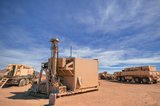
The Northrop Grumman Integrated Battle Command System is in service with Poland and the US Army with another 20 countries believed to have expressed an interest.

The Thales DigitalCrew package, first unveiled at last year’s Defence IQ International Armoured Vehicles conference, is designed to merge imaging and apply a layer of decision-making and observation algorithms to support crew and other personnel.

Nomad can provide militaries with real-time intelligence, saving critical time on the battlefield.
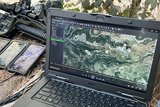
Taurus operates alongside the Israel Defense Forces’ Orion system which supports mission management across tens of thousands of manoeuvring forces, from squad leaders to battalion commanders.
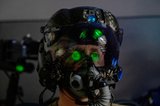
The plan for the new displays follows fresh investment in Kopin’s European facilities by Theon and an order for head-up displays in fielded aircraft, with funding from the US Department of Defense.
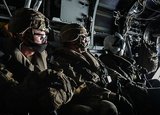
Persistent Systems received its largest ever single order for its MPU5 devices and other systems earlier this month and has already delivered the 50 units to the US Army’s 4th Infantry Division.

Connect with us on socials


