


Polaris upgrades MRZR for heavier payloads and announces US Air Force contracts
A reinforced version of the 6x6 MRZR ultra-light mobility vehicle can transport a payload of approximately 1,360kg and munitions such as Northrop Grumman’s Jackal.


“The Cube” is a small-sized ground-based cross-domain system. (Photo: General Micro Systems)
General Micro Systems (GMS) has unveiled four new customisable cross-domain systems (CDS) based on its X9 distributed computing architecture at AUSA 2024.
Presented on day one of the defence exhibition in Washington, DC, the new systems includes an airborne three-enclave (Purple, Red, Black) CDS; a large ground-based CDS with storage canister and Ethernet switch; a small-sized ground-based called “The Cube”; and a ¼ ATR OpenVPX-based CDS.
The solutions have been designed in a compact, lightweight form to provide real-time security across multi-domain secure and public systems during live combat. Their features include mission processing, secure storage and authentication, encryption, networking and
Already have an account? Log in


A reinforced version of the 6x6 MRZR ultra-light mobility vehicle can transport a payload of approximately 1,360kg and munitions such as Northrop Grumman’s Jackal.
EOS Defense Systems remote weapon stations (RWS) have been in service in Ukraine. The company has seen users deploy it for CUAS roles in a war where drones have been heavily used.

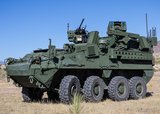
Oshkosh Defense has faced a series of delays due to trial issues with just 100 of 269 contracted Stryker Medium Calibre Weapon Systems having been delivered to the US Army so far.
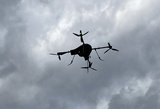
WaveAerospace has been showcasing its MULE heavy-lift VTOL UAS, designed for contested logistics missions with a payload capacity of more than 40kg and up to four hours of endurance, while also introducing Huntress, a fast multirotor UAS. Both will be expected to enter production by 2025.

Designed for launch from 155mm conventional artillery systems, General Atomics’ latest missile could reach low-rate initial production by 2026.

The market for uncrewed ground vehicles (UGVs) is rapidly evolving, with profound implications for future military operations. As we look to the coming decade, the potential for these autonomous platforms to redefine the battlefield is immense.

Connect with us on socials


