Babcock nears first customer for Nomad AI translation tool
Nomad can provide militaries with real-time intelligence, saving critical time on the battlefield.
FLIR Systems has been awarded a production order for its Mobile Surveillance Capabilities (MSC) systems for the US Customs and Border Protection (CBP) agency, the company announced on 7 July.
The $19.5 million order is the second option for additional MSC units under a five-year contract between the company and CBP.
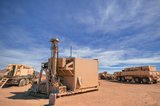
The MSC system is a mobile surveillance and detection vehicle that can operate in rugged areas in day and night on the southern border of the US. It features a TacFLIR 380HD long-range stabilised multi-sensor system as well as a long-range radar on a vehicle-mounted surveillance tower.
The additional MSC systems will be delivered in the next 12 months.
Andy Teich, president and CEO, FLIR Systems, said: 'We are pleased to provide these additional MSC integrated surveillance systems to the US Department of Homeland Security. Our ability to integrate advanced imaging and sensing systems has provided our customers with proven, reliable, and robust solutions for protecting borders and providing long-range situational awareness. We look forward to continuing our successful deployment of these systems with the US CBP in this important mission.'
Nomad can provide militaries with real-time intelligence, saving critical time on the battlefield.
Taurus operates alongside the Israel Defense Forces’ Orion system which supports mission management across tens of thousands of manoeuvring forces, from squad leaders to battalion commanders.
The plan for the new displays follows fresh investment in Kopin’s European facilities by Theon and an order for head-up displays in fielded aircraft, with funding from the US Department of Defense.
Persistent Systems received its largest ever single order for its MPU5 devices and other systems earlier this month and has already delivered the 50 units to the US Army’s 4th Infantry Division.
Turkey has joined the family of countries attempting to establish a multilayered air defence system with government approval in August 2024 for the effort landed by Aselsan. Dubbed Steel Dome, the programme joins Israel’s Iron Dome, the US Golden Dome, India’s Mission Sudarshan Chakra and South Korea’s low-altitude missile defence system.
MARSS’ NiDAR system has been deployed using sensors from static platforms to provide detection and protection for static sights, such as critical infrastructure, ports and military bases.