Artificial intelligence: the hope, the hype and the real-world reality
Whitespace’s AI capability, Saga, has been integrated into HMS Prince of Wales. (Photo: UK MoD/Crown Copyright)
Artificial intelligence has supported C2 systems and decision-making for more than two decades. It has gradually built up a head of steam in the 2020s, but what is it achieving today and what role could it play in the future?


The launch of Operation Epic Fury by US and Israeli forces against Iran on the last day of February saw the latest generation of weapons deployed in massive numbers. It had a declared aim of depleting Iran’s ballistic missile arsenal, missile production facilities, naval forces and critical security infrastructure.
Speaking less than two weeks into the operation which ran until late May, Adm Brad Cooper, Commander of US Central Command (CENTCOM), highlighted not only the thousands of bombs and missiles used in the first days but also the evolving nature of modern warfare.
While the first operational use by US forces of the latest generation of weapons, such as Precision Strike Missile (PrSM) and Low-Cost Uncrewed Combat Attack System (LUCAS), drew significant attention, Cooper also turned the spotlight on artificial intelligence (AI).
Related Articles
How the use of artificial intelligence will affect the US Coast Guard’s acquisitions
Thales looks to boost DigitalCrew system through AI and human-machine teaming trials
How AI is reshaping defence procurement through sustainment
“Our warfighters are leveraging a variety of advanced AI tools [and] these systems help us sift through vast amounts of data in seconds, so our leaders can cut through the noise and make smarter decisions faster than the enemy can react,” Cooper said.
“Humans will always make final decisions but advanced AI tools can turn processes that used to take hours and sometimes even days into seconds.”
Delivering the punch faster
The UK has embedded the use of AI into its existing C2, intelligence and battle management structures as well as supporting the development of AI in a hands-on way.
An example of this is Adarga’s Vantage system which builds on the company’s Knowledge Platform which was developed over a period of six years with the latter evaluated as part of a Capability Concept Demonstrator under a multimillion-pound contract. The system processes, organises and analyses open source material as well as information held by the user’s military, security and intelligence services.
More broadly, the UK Ministry of Defence (MoD) established the Defence Artificial Intelligence Centre (DAIC), according to the MoD, to “champion, enable and innovate AI across UK defence”. It is designed to work collaboratively with government, industry, academia and allies for the strategic advantage of armed forces.
The MoD defines key functions of the DAIC as “to increase the quality of decision-making and tempo of operations and enhance the mass, persistence, reach and effectiveness of military forces”.
Integrating AI across the UK forces
Thales UK is this month delivering an AI capability into the UK’s Multi-Domain Mission Support System (MD MSS), a data platform for management, exploitation and distribution of critical mission, environmental and intelligence data.
At its core, MD MSS processes, transmits and manipulates complex mission data, from multiple sources and locations, to deliver critical information at speed to aircrew and ground-based planners.
MD MSS is used on the F-35B Lightning II, Typhoon, Poseidon, Voyager and Chinook aircraft and is also installed aboard HMS Queen Elizabeth and HMS Prince of Wales, supporting air operations by the Carrier Strike Group.
The AI segment was developed by the company’s cortAIx facility which brings together a range of Thales capabilities. It is well established in France and last year a UK facility was established which was instrumental in the MD MSS work.
Speaking to Shephard, Darren Shepherd, business director for Thales integrated airspace protection systems, said the AI component provided faster decision making by using data to create a clearer picture.

“For example, if you’ve got a maritime picture that is showing thousands of boats in real time going down the English Channel or in the North Sea and everything else, the end user will see a very cluttered picture,” Shepherd said.
“[There’s] a ferry that’s going backwards and forwards between Northern Ireland and Scotland and that’s a straight track.
“If the system sees any tracks like that, ignore them, and it will then declutter it by searching the rest of the area and looking not for identical things but similar things of a similar nature and it will then remove it to declutter the map.
“Another good example would be if something behaves in an abnormal way, so you might see a ship is doing zig-zags in the North Sea, which tends to be a trait of these Russian shadow fleet that are trying to drag up our cables. You can let the system know to be alert to this anytime in the future.”
A key aspect of the AI now underpinning MD MSS is Frugal Learning, one of the first applications of the system from the cortAIx Factory establishment which is designed to use substantially less data as opposed to the traditional terabytes of information.
AI and the procurement bank balance
UK company Whitespace, co-founded by CEO Paul Jenkinson who has spent decades working in the technology space, has been working with AI in the defence sector since 2019.
“Gen Patrick Saunders, then head of UK Strategic Command, came to us and said he had a $100 billion problem over the next decade in buying things that were not large platforms. It’s from sniper rifles to satellite systems to C2, hundreds of programmes,” Paul Jenkinson told Shephard.
“He said they were making decisions on the back of a spreadsheet but this is way more complicated than that and we said ‘You’re absolutely right’ so we built them a decision intelligence platform using AI to help them understand their investment portfolio.
“As a result of this work, Whitespace was asked to look at other complex AI problems and then into ChatGPT as two different solutions. So, when ChatGPT came out, everyone’s like, ‘All right, this could be really interesting’ but what the MoD didn’t know is that they already had that capability.”
At the sharper end, Whitespace supported Project Asgard as part of the Exercise Arrcade Strike, a major multinational effort led by HQ Allied Rapid Reaction Corps (ARRC) focused on future operational command and coordination in complex and contested environments.
Asgard forms part of the work to create a wider digital targeting web across the UK’s Armed Forces by 2027, backed by more than £1 billion in funding. Within Asgard, the UK MoD awarded 26 companies contracts in April this year under the Digital Decision Accelerators for Defence (DDAD) programme which could be worth as much as £180 million.
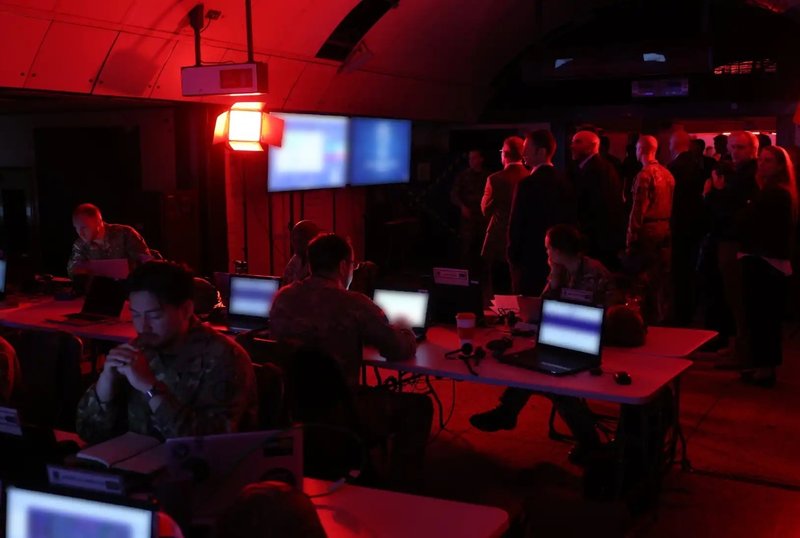
Also at the sharp end, Whitespace’s fully integrated sovereign AI capability, Operational Learning (Saga), was integrated into Oracle Cloud Infrastructure (OCI) Roving Edge Infrastructure aboard HMS Prince of Wales. This is designed to enable the UK Royal Navy (RN) to use its sovereign AI platform to support the UK’s national security whether HMS Prince of Wales is in national waters or deployed abroad.
Whitespace developed Collective, a modular AI operating system for high-risk environments. Within Collective, Saga provides an intuitive, app-like interface that allows RN personnel to capture lessons, review mission data and access tailored AI support in one secure environment.
“The core of [AI] technology is about how do you make more effective decisions, how do you make smarter decisions, and I think the way we see things is that we’ve gone through the first declaration of an AI revolution,” Jenkinson said.
“[AI] only cares about maths; it doesn’t care about anything else. So where you’re looking at [a troubled programme], the emotional way you think about it is, ‘Well, we’ve already spent £500 million [so] we have to do the next £250 million’.
“Humans find it really hard to cancel things whereas AI would just say, ‘The logic is [to get out]’, because it’s also looking at what other programmes could be done as a consequence. It could say, ‘Actually, that money could be used so much better on a modular capability’.”
Tri-national AUKUS effort drives experimentation
While the future submarine programme under Pillar 1 of the Australia-UK-US (AUKUS) agreement is the big-ticket attention-grabber, Pillar 2 is just as pivotal and has progressed more quickly when it comes to producing results.
Pillar 2 is described as providing advanced capabilities such as next-generation weapons, hypersonic and counter-hypersonic missiles and systems, cyber and quantum technologies as well as AI and autonomy.
In 2024, the three nations trialled the integration of autonomy and AI through the deployment of a series of AI-enabled uncrewed aerial systems (UAS) to reduce the time it takes to identify enemy targets.
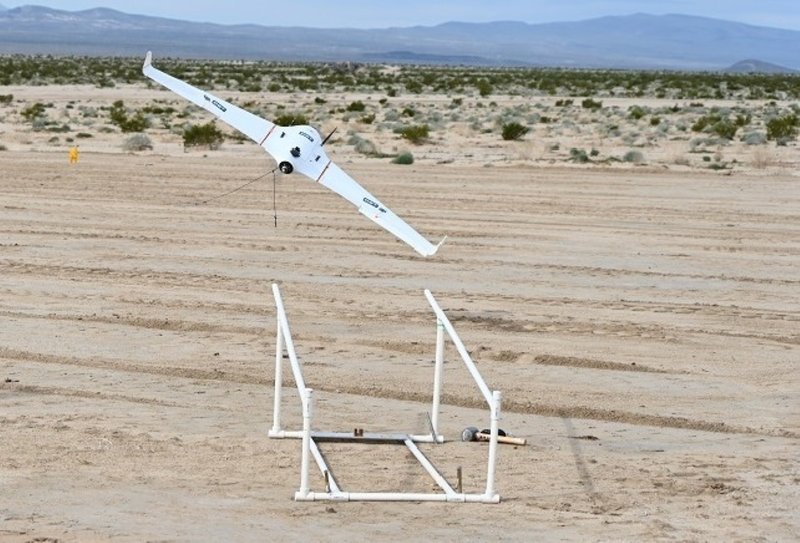
A key feature was an effort to show practical applications. In one case this involved a plug-in for the Tactical Assault Kit (TAK), a map-based software application that helped a UK UAS detect opposing force locations using on-the-fly adjustments based on the data collected. This then saw another UAS providing detailed imagery as confirmation.
The information was passed to the Tactical Operations Center where a uniformed AI officer provided human oversight prior to triggering an Australian XT-8 UAS to perform a simulated strike.
With experimentation, development and fielding still far down the road, a key question will be how to create an empirical measure to demonstrate the effectiveness of AI capabilities to justify potential changes to procurement priorities.
The science fiction film-style dystopian scenario of AI causing substantial undesired effects will also need to be considered in terms of tactics, techniques and procedures, most particularly the use of AI within rules of engagement.
Shephard’s Farnborough International Airshow coverage is sponsored by MBDA

Related Programmes in Defence Insight
AUKUS-SSNs/SSN(R) Astute Replacement Programme [UK]
Related Equipment in Defence Insight

You may also like

More from Farnborough International Airshow 2026 | View all news
-
![How the evolving MQ-9B is opening new markets for GA-ASI]()
How the evolving MQ-9B is opening new markets for GA-ASI
With $12 billion in deals already signed and several major procurements on the horizon, the evolution of GA-ASI’s MQ-9B could lead to additional deals for the popular aircraft.
-
![FIA 2026: Gripen marks operational milestone as Ukraine deal moves forward]()
FIA 2026: Gripen marks operational milestone as Ukraine deal moves forward
At the end of June, Ukraine and Sweden signed a landmark deal which calls for a first batch of used Gripen C/Ds to be delivered from 2027, followed by the more advanced Gripen E.
-
![FIA 2026: Anduril pitches Thunder as force multiplier for Boeing’s AH-64 Apache]()
FIA 2026: Anduril pitches Thunder as force multiplier for Boeing’s AH-64 Apache
Anduril has revealed Thunder, an autonomous tiltrotor rotorcraft designed as a loyal wingman for the Boeing Apache attack helicopter, ahead of Farnborough International Airshow 2026.
-
![How the UK’s New Medium Helicopter award strengthens AW149’s European prospects]()
How the UK’s New Medium Helicopter award strengthens AW149’s European prospects
The UK advanced its long-delayed New Medium Helicopter programme in March with a £1 billion order for 23 Leonardo AW149s. While the deal could provide a foundation for further UK and European export orders, funding pressures and previous delays continue to cloud the programme’s future.
-
![Canadian observer status reinforces GCAP’s strength in emerging ‘middle power’ bloc]()
Canadian observer status reinforces GCAP’s strength in emerging ‘middle power’ bloc
The significant setback seen by FCAS earlier this year has secured GCAP’s position as Europe’s future sixth-generation fighter, while Canada’s potential observer status could push the programme into the next stage.
-
![“Timelines are measured in seconds”: tackling the UAS threat with dispersed defences]()
“Timelines are measured in seconds”: tackling the UAS threat with dispersed defences
Small uncrewed aerial systems (UAS) have transformed the battlespace, posing a complex threat across all domains. Militaries now need counter-UAS (CUAS) capabilities that defeat the danger while meeting demands around readiness, manoeuvrability and adaptability, according to Mike Spina, Director, Global Sales and Business Development for Targeting and Sensor Systems (TSS) at L3Harris Technologies.