Why small guns have been critical to layered CUAS architectures
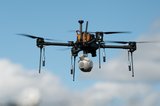
A US soldier practises target lock-on against an incoming drone. (Photo: US Army)
Multiple countries have been deploying small arms as the last line of drone defence due to their multiple operational and tactical advantages.


The proliferation of low-cost drones in air, land and naval environments has highlighted the relevance of small arms as part of layered counter-uncrewed aerial system (CUAS) architectures. With no silver bullet to defeat uncrewed aerial vehicles (UAVs), armed forces worldwide have been deploying these guns as the closest level of protection.
This reflects the tactical and operational benefits that rifles, shotguns, submachine guns and machine guns can provide, such as cost-effectiveness, flexibility, kinetic effect, mobility and reduced collateral damage.
Speaking to Shephard, Jack Cadman, military group manager at Beretta Defence Technologies (BDT) UK, which is part of Beretta
Already have an account? Log in
Want to keep reading this article?

More from Defence Notes
-
![India’s strategic defence footprint expansion could be accelerated by Iran-Israel conflict]()
India’s strategic defence footprint expansion could be accelerated by Iran-Israel conflict
The latest escalation between Iran and Israel could shape New Delhi’s next-generation shield as India deepens cooperation with Israel on missile defence and drone production.
-
![Is the US magazine of air defence interceptors deep enough to sustain a long campaign against Iran?]()
Is the US magazine of air defence interceptors deep enough to sustain a long campaign against Iran?
The Pentagon spent a considerable number of THAAD and SM-3 rounds to defend against Iranian missiles in 2025 and has not fully replenished its reserves.
-
![New Zealand buys tri-service uncrewed kit from Syos Aerospace]()
New Zealand buys tri-service uncrewed kit from Syos Aerospace
As uncrewed technology continues to play an increasingly central role in modern military activities, New Zealand’s recent acquisitions point towards its the force’s focus on cost-effective capability.
-
![Golden Dome for America hits one-year mark but key questions remain on its progress]()
Golden Dome for America hits one-year mark but key questions remain on its progress
Integration issues, bureaucracy and undefined policies and authorities could hamper the full implementation of the “shield” to defend the US territory against aerial threats.
-
![US Air Force pushes Sentinel’s initial capability to early 2030s despite China’s nuclear progress]()
US Air Force pushes Sentinel’s initial capability to early 2030s despite China’s nuclear progress
While the US struggles to modernise the 50-year-old land leg of its nuclear triad, China has been rapidly developing and fielding new nuclear capabilities.