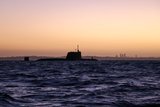
US considers SM-2 sale to South Korea
The US State Department has made a determination approving a potential Foreign Military Sale (FMS) of SM-2 Block IIIB Standard missiles, containers and support to South Korea for $65 million, the Defense Security Cooperation Agency announced on 5 July.
South Korea has requested a possible sale of 17 SM-2 Block IIIB Standard Missiles and 17 SM-2 missile containers. The request also includes publications and technical data; personnel training and training equipment; US government and contractor technical assistance, and other related logistics support.
The missiles will be used by the Republic of Korea Navy to supplement its existing SM-2 Block IIIA/IIIB inventory.
Raytheon Electronic Systems will be the principal contractor of the proposed sale.
The SM-2 features anti-air warfare and limited anti-surface warfare capability against anti-ship missiles and aircraft. It has an effective range of 90nm and an altitude ceiling of 65,000ft. Its Block IIIA and IIIB variants have semi-active radar seeker technologies in interrupted and continuous wave guidance modes.




More from Defence Notes
-
![UK urged to prioritise sea, air and space over heavy armour]()
UK urged to prioritise sea, air and space over heavy armour
A report from the Council on Geostrategy argues the UK should move away from a traditional balanced force and shift investment to naval, air and space capabilities, backed by a larger fleet of attack submarines and deeper AUKUS integration.
-
![Thales: deployment speed to determine winners in ‘production versus production’ era]()
Thales: deployment speed to determine winners in ‘production versus production’ era
At its technology summit in London, attended by Shephard, Thales UK examined the importance of speed to delivery, the growing focus on cross-domain capabilities and how procurement reform could be crucial for future battlefield advantage.
-
![Orchestrating operational readiness across every defence domain]()
Orchestrating operational readiness across every defence domain
Are all systems ready for the next mission? Have upgrades been applied? Are all assets aligned to deploy together, on time and fully prepared? In modern defence operations, readiness is no longer measured platform by platform. It is measured by how well people, assets, data and decisions move together — across land, sea and air.