Japan claims China ‘escalating’ military actions


Japan’s defence chief on 3 September warned the country faces a tough security environment, with China and Russia stepping up military activity and North Korea posing ‘imminent threats’.
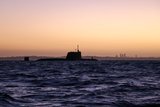
Japanese Defence Minister Itsunori Onodera said China had been ‘unilaterally escalating’ its military activities in the past year, including carrying out new airborne operations around Japan and running a nuclear submarine near disputed East Coast isles.
Onodera told an annual gathering of the top brass of Japan’s Self-Defense Forces: ‘China has been rapidly improving its military strength and fast increasing its military activities. It is unilaterally escalating its military activities in the sea and aviation spaces around our country. This has become a significant concern for our country’s defence.’
Onodera made the remarks as Tokyo attempts to improve its tense diplomatic ties with Beijing, with Prime Minister Shinzo Abe expected to visit Japan’s biggest trade partner in October 2018.
On coming to power, Abe took a firm position on Japan’s claims to a disputed island chain in the East China Sea, aggravating tensions with Beijing.
But he has since softened his rhetoric, and called on China to press North Korea to give up its nuclear and missile programmes.
Japanese businesses have also voiced desire for closer ties with China to boost trade.
Onodera said Russia was also flexing its military muscle.
Moscow is planning to hold its biggest drill since the Cold War era and is bringing powerful weapons, including ground-to-air missiles, to the disputed Southern Kuril islands, he said.
Onodera said: ‘We are seeing movement to again push forward its military activities in the Far East.’
Onodera also repeated that North Korea continues to pose a ‘serious and imminent threat’ to Japan, despite international diplomacy intended to convince Pyongyang to denuclearise.


More from Defence Notes
-
![Ukraine turns legacy Kongsberg land turrets into semi-autonomous USV weapons]()
Ukraine turns legacy Kongsberg land turrets into semi-autonomous USV weapons
The company told Shephard that Ukraine is operating modified Protector weapon stations originally supplied for armoured vehicles, with human operators authorising engagements from hundreds of kilometres away.
-
![UK urged to prioritise sea, air and space over heavy armour]()
UK urged to prioritise sea, air and space over heavy armour
A report from the Council on Geostrategy argues the UK should move away from a traditional balanced force and shift investment to naval, air and space capabilities, backed by a larger fleet of attack submarines and deeper AUKUS integration.
-
![Thales: deployment speed to determine winners in ‘production versus production’ era]()
Thales: deployment speed to determine winners in ‘production versus production’ era
At its technology summit in London, attended by Shephard, Thales UK examined the importance of speed to delivery, the growing focus on cross-domain capabilities and how procurement reform could be crucial for future battlefield advantage.
-
![Orchestrating operational readiness across every defence domain]()
Orchestrating operational readiness across every defence domain
Are all systems ready for the next mission? Have upgrades been applied? Are all assets aligned to deploy together, on time and fully prepared? In modern defence operations, readiness is no longer measured platform by platform. It is measured by how well people, assets, data and decisions move together — across land, sea and air.