Aussie DoD funds new innovative technologies
The Australian government has approved $10.1 million in funding for seven Australian organisations to develop and demonstrate innovative defence technologies, the Department of Defence announced on 14 September.
The funds will be provided under the Capability and Demonstrator programme, which is managed by the Defence Science and Technology Group.
The department has selected seven technology proposals from Australian science organisations, universities and companies. The proposals were submitted by the University of Canberra, Ocius Technology, Micro-X, CSIRO, Armor Composite Engineering, the Bureau of Meteorology and Deakin University.
The successful proposals for 2015 include technology for the land, air and sea domains.
Land technologies include a low profile body armour for improved soldier protection; a miniaturised wide-band, low-noise radio frequency antenna; and mobile x-ray imagers for use during field deployments to detect improvised explosive devices.
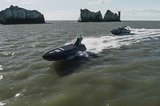
In the sea domain technologies include a stealthy unmanned surface vessel to track submarines and torpedoes, and technology that securely transmits three-dimensional geospatial data to ships at sea.
Air developments will include a tactile flight display that improves helicopter safety in poor visibility and threat environments; and a low-cost, high-G centrifuge for simulators used in pilot training.




More from Defence Notes
-
![Orchestrating operational readiness across every defence domain]()
Orchestrating operational readiness across every defence domain
Are all systems ready for the next mission? Have upgrades been applied? Are all assets aligned to deploy together, on time and fully prepared? In modern defence operations, readiness is no longer measured platform by platform. It is measured by how well people, assets, data and decisions move together — across land, sea and air.
-
![Global tensions drive defence supply chain scrutiny]()
Global tensions drive defence supply chain scrutiny
Governments worldwide are scrambling to decouple defence supply chains from dependency upon strategic rivals, but countries could struggle to do it all themselves.
-
![How deepening AI usage can boost efficiency and maximise effects for forces]()
How deepening AI usage can boost efficiency and maximise effects for forces
Saab has outlined how it is using artificial intelligence to make training more like electronic gaming, while the UK’s Power Size Technologies is applying the same technology to better evaluate and design vehicle capability, moving AI-enabled innovation further upstream from the frontline.
-
![From systems integrator to multi-domain solutions provider (video)]()
From systems integrator to multi-domain solutions provider (video)
Philipp von Brandenstein, Head of Corporate Communications at Rheinmetall, explains how Eurosatory 2026 marked a new stage in the company's evolution.
-
![US Pentagon pushes for major reform of defence acquisition system]()
US Pentagon pushes for major reform of defence acquisition system
The US Department of Defense has requested new contracting authorities from Congress, using the Army's MV-75 Cheyenne programme to demonstrate how competition, digital engineering and closer industry collaboration could accelerate acquisitions.