USAF plans major CCA expansion with new suppliers and billions in funding
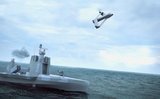
A YFQ-42A takes off during flight testing. (Photo: US Air Force)
US Air Force leaders say open architecture and broader industry participation will help deliver affordable autonomous wingmen capable of overwhelming future adversaries.


The US Air Force (USAF) intends to include new suppliers in the Collaborative Combat Aircraft (CCA) programme in an effort to reduce costs and ensure the future family of attritable, affordable, risk-tolerant autonomous systems will have an open architecture with relevant capabilities for tomorrow’s warfare.
“We have competition, open standards that allow us to bring in separate contracts for different pieces of the hardware, additional contractors from the avionics to the aircraft bodies themselves and engines,” the Secretary of the Air Force, Troy E Meink, explained in a session at the Senate Appropriation Committee on 9 June.
Part of the USAF’s Next
Our news & analysis is now part of Defence Insight®
A Basic-level or higher Defence Insight subscription is now required to view this content.


More from Country-focused updates
-
![Nuclear costs crowd out key defence priorities in UK investment plan, say SDR authors]()
Nuclear costs crowd out key defence priorities in UK investment plan, say SDR authors
The UK government’s Defence Investment Plan has been criticised by the authors of the Strategic Defence Review (SDR) 2025 which formed the basis of the plan. The SDR’s external reviewers told the country’s defence committee how the plan misses the mark.
-
![Russia tries to keep BMP-3 relevant with new weapon options]()
Russia tries to keep BMP-3 relevant with new weapon options
New iterations of a 57mm gun system highlight a push towards multi-role turrets capable of countering armour, drones and aerial targets.
-
![Can Portugal solve NATO’s uncrewed systems development challenge?]()
Can Portugal solve NATO’s uncrewed systems development challenge?
NATO has spent more than a decade building one of the world’s most sophisticated maritime uncrewed experimentation ecosystems, but still lacks a way to translate this testing into alliance-wide operational capability. Portugal now believes it has the answer.
-
![Eurosatory 2026: Locally produced loitering munition destined for UAE Navy, says MBDA]()
Eurosatory 2026: Locally produced loitering munition destined for UAE Navy, says MBDA
The contract signed between MBDA and Fly-R will see diamond-shaped loitering munitions developed and prepared in the UAE. How does this move fit into wider market trends in the region?
-
![Eurosatory 2026: MBDA and Thales look to civilian industry for loitering munition scale-up]()
Eurosatory 2026: MBDA and Thales look to civilian industry for loitering munition scale-up
Thales and MBDA have taken steps to ensure the mass production of their respective loitering munition offerings at Eurosatoy, teaming with civilian manufacturers. These moves come amid France’s push towards sovereign drone production and continued market expansion.
-
![Eurosatory 2026: IDV expands with new Viking and CL2X UGV]()
Eurosatory 2026: IDV expands with new Viking and CL2X UGV
At Eurosatory 2026, uncrewed ground vehicles (UGVs) are front and centre of IDV’s display, with a new variant of the Viking and the new CL2X on show.