US Army order for CH-47F Block II aircraft takes total contracted to 18 in rapid fielding effort
One of six CH-47F Block IIs delivered to the US Army conducts a flight test at Redstone Test Center in Huntsville, Alabama. (Photo: Boeing/Studio 51).
Boeing has delivered six Chinook CH-47F Block II production helicopters to the US Army, with the helicopters now undergoing a series of evaluations to demonstrate their enhanced capabilities. The company is working with the army on a path forward for Lot 6.


The US Army has placed contracts for an additional nine Boeing CH-47F Block II Chinook heavy-lift helicopters under a deal for Lot 4 and 5 awards worth US$461 million.
This follows the decision late last month to advance the Rapid Fielding Effort for Chinook Block II which authorises the procurement of Block II aircraft in FY25 and FY26.
Alongside previously approved Congressionally directed procurements, the army will field CH-47F Block II helicopters to two Combat Aviation Brigades, modernising the Army’s heavy-lift fleet for future large-scale combat operations.
The CH-47F Block II aircraft are upgraded from the CH-47F Block I, featuring significant
Our news & analysis is now part of Defence Insight®
A Basic-level or higher Defence Insight subscription is now required to view this content.

You may also like

More from Air Warfare
-
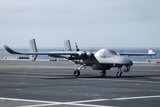
![Tekever eyes naval carrier surveillance role for AR5 uncrewed aircraft]()
Tekever eyes naval carrier surveillance role for AR5 uncrewed aircraft
Tekever’s AR5 carrier debut highlights its potential for maritime surveillance as the Royal Navy develops its future hybrid air wing.
-
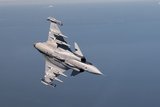
![F-16 backbone, Gripen spearhead: Ukraine’s future fighter fleet takes shape]()
F-16 backbone, Gripen spearhead: Ukraine’s future fighter fleet takes shape
Ukraine’s future fighter fleet could combine F-16s, Gripens and potentially Rafales, balancing combat needs against training, logistics and aircraft supply constraints.
-
![Northrop–Hermeus deal underscores push to pair startup speed with defence know-how]()
Northrop–Hermeus deal underscores push to pair startup speed with defence know-how
Northrop Grumman plans mission systems testing following its Hermeus agreement, highlighting how established defence contractors are partnering with newer companies to accelerate development and bring autonomous capabilities to military customers.
-
![Advances in AI sensing technology reshape how UAV operators interpret battlefield data]()
Advances in AI sensing technology reshape how UAV operators interpret battlefield data
AI-powered sensing technologies are advancing battlefield intelligence capabilities, with companies including Sightline Intelligence and Arkeus developing smaller, more sophisticated systems to help military UAV operators process data and identify threats.
-
![Propulsion for the autonomous era]()
Propulsion for the autonomous era
For decades, advanced military propulsion has centred on enabling ever-more capable fighters and bombers – delivering more thrust, more range, greater power, and thermal management, plus longer service lives. Those requirements remain essential. However, the rise of autonomous systems, advanced effectors, and autonomous collaborative platforms is redefining what that propulsion must deliver.