UK Defence Investment Plan: What does it mean for UK air power?
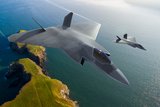
The Global Combat Air Programme has secured large swathe of the DIP funding boost at £8.6 billion. (Photo: BAE Systems)
After months of delays and setbacks, the UK has finally published its Defence Investment Plan (DIP), which includes an extra £15 billion (US$19.86 billion) funding boost outlining the future of the British Armed Forces and what platforms and programmes will be funded.
In a briefing ahead of its release, the MoD said that the plan provided the UK with a “route to start to close our [capability] gaps”, with a sharper focus on delivering a mass number of capabilities over the next four years to 2030. In total, the UK government said that it would be spending £80 billion on defence by 2029.
For UK combat air capabilities, the DIP balances upgrading and sustaining existing platforms, such as the Royal Air Force’s Eurofighter Typhoon and air mobility platforms, alongside funding next-generation programmes and uncrewed systems to build “greater readiness and resilience” for the UK’s armed forced across air, land and sea, as first outlined in the Strategic Defence Review (SDR).
Related Articles
British Army’s Project Nyx progress reflects MoD investment in autonomous system
BAE Systems’ UK Combat Air Demonstrator closes in on final assembly
£8.6 billion for GCAP, commitment to national CCA programme
Key to the DIP was the commitment to secure future air combat warfare capabilities. The MoD has earmarked £8.6 billion for the Global Combat Air Programme (GCAP) over the next four years, which would provide funding through the concept and into the design phase of the programme. The announcement follows the first GCAP funding milestone in April 2026, the £686 million design and development contract awarded to joint venture industry body Edgewing, which would run until June 2026.
On the significance of this funding amount for the UK’s future air warfare capabilities, Isolde Hatgis-Kessell, air analyst at Shephard, said: “The UK’s £8.6 billion investment in GCAP over the next four years represents continued dedication to the project and a clear recognition of its importance to British sovereign air capabilities. This investment is a strong signal in the wake of the collapse of the FCAS that the US will see a rival to the F-47.”
The MoD also emphasised a commitment to a “new, national” Collaborative Combat Air (CCA) programme – with the aim to field and fly a demonstrator by 2030.
An MoD spokesperson said it would put an initial investment of £300 million into the new national CCA programme, with “some form of international partnership” possibly on the table for the future.
The newly developed autonomous fighter jet will fly alongside crewed aircraft, Eurofighter Typhoon, F-35A and, when operational, the sixth-generation Tempest jet.
This is not the first time the UK has committed to develop a national CCA programme. The now cancelled Project Mosquito, announced in 2022, was a development programme for a new low-cost uncrewed ‘Loyal Wingman’ concept called the Lightweight Affordable Novel Combat Aircraft (LANCA).
In March 2024, the Royal Air Force (RAF) also released its ACP strategy which set out how uncrewed aerial vehicles (UAVs) will be introduced into frontline service over the next decade. It outlined three main ACP tiers that could be used, depending on requirements: Tier 1 (disposable drones), Tier 2 as attritable aircraft – with the example of the Gremlin UAV – and Tier 3 as a survivable high-value platform.
Eurofighter remains “backbone” and Hawk replacement set
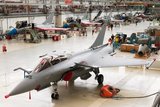
Away from next-generation crewed platforms, the UK MoD also emphasised commitment to the Eurofighter Typhoon programme and its planned upgrades, which it termed as the “backbone” of UK air defence.
The MoD has long highlighted the importance of the Typhoon aircraft for the RAF’s fleet, with investment for full production of the ECRS Mk2 radar awarded in January 2026. The upgrades to the fleet will allow the combat aircraft to keep operating out until the 2040s.
BAE Systems told Shephard that rapid capability enhancements already achieved on the Typhoon, namely the APKWS integration, had sparked interest from other customers. The installation of the APKWS on the Eurofighter Typhoon is just one step in a long line of planned capability enhancements for the combat aircraft –the Phase 4 Enhancements (P4E) upgrades, which will include the integration of the ECRS Mk2 radar on RAF Typhoons.
Funding to boost the UK’s nuclear deterrence through the acquisition of 12 F-35As was also confirmed in the DIP, first announced in June 2025. A long-awaited programme to replace the ageing Hawk T1 and T2 trainer aircraft was also disclosed. £360million has been held to overhaul the Jet Training System, to “deliver both sovereign and international training” and with a significant UK workshare, with the DIP noting the completion and fielding of new jets for the Red Arrows to replace the ageing Hawk aircraft as a key investment through 2030-2035.
£5 billion to fund “drone transformation”
The DIP has also emphasised heavy investment into uncrewed platforms, with an additional £5 billion of the funding proposed to be spent on uncrewed and autonomous capabilities across the three main forces over the next four years.
As part of this £5 billion, £650 million will be allocated specifically on delivering cost-effective, attritable autonomous systems. Key to this endeavour could be the procurement of one-way effector (OWE) systems such as Callen-Lenz’s Nyan OWE which the company told Shephard last week had already proven itself in Ukraine with “thousands” of systems and is currently “in use” with the British Army.
The British Army will also now see a £50 million boost over the next 12 months for its RAPSTONE programme, funding additional first-person view and interceptor drones.

Key programmes for larger uncrewed systems that made the cut were the British Army’s replacement for its long troubled Watchkeeper system, Project Corvus, for up to 24 surveillance drones, which was first disclosed by the UK MoD in April 2025.
Project Nyx – the British Army’s answer to fielding a loyal wingman for AH-64 Apache helicopters – was also listed to procure up to 24 autonomous systems, which in May 2026 narrowed down its competition to four bids. The final two bids are expected to be chosen by autumn to then build prototypes with operational capability planned for 2030.
Commenting on the increased investment into uncrewed autonomous systems in the DIP, Matthew Savill, director of military sciences at defence and security thinktank Royal United Services Institute (RUSI) said: “Considerable emphasis is placed on autonomy and uncrewed systems to compensate for the limited mass the UK’s Armed Forces can currently bring to bear.
“This gives a clear prioritisation of effort but puts pressure on a mixture of experimental technology and evolving concepts – a bold bet on technological solutions with no margin for error if procurement is not speedy and implementation rapid.”
Helicopter ambitions paused and retirement of ISR platforms
Questions remain, however, about the sustainment and future of the UK’s helicopter platforms and ISR capabilities.
An MoD spokesperson confirmed that the DIP would see the early retirement of Shadow R1 surveillance aircraft. There are, however, plans to look towards how – as part of the UK’s investment in autonomy – uncrewed autonomous ISR assets could bolster the UK’s capabilities in place of crewed platforms, as part of a “phased activity” over time – yet the DIP did not clarify which platforms could be considered.
While Leonardo was awarded with a £1 billion New Medium Helicopter (NMH) programme in March, the DIP outlined that of that amount, £680m would be spent over the next four years, to commence building 23 NMH. Yet, other questions remain around current in-service helicopter platforms and their place in a future force mix, given the increased investment on autonomous systems.
The MoD spokesperson confirmed that investment in DIP would “delay UK helicopter ambitions” for the British Army. There will be a “phased earlier retirement” of older Chinooks (Mk6A) and Wildcat helicopters, with both facing a retirement window from 2027, the latter being likely replaced with uncrewed systems.
“The idea of sending a crewed helicopter forward over any enemy lines to visually search for targets doesn’t feel like it makes any sense in a modern battlefield. So we will invest in new uncrewed technology to do that job in the future,” an MoD spokesperson stated ahead of the DIP’s release.
Shephard’s Farnborough International Airshow coverage is sponsored by MBDA

Related Programmes in Defence Insight
More from Farnborough International Airshow 2026 | View all news
-
FIA 2026: Embraer, Anduril sign agreement to develop cruise missile launch capability for the C-390
The Brazilian airframer and US developer have announced plans to offer a palletised launch system for the twinjet tactical airlifter.
-
FIA 2026: Tekever targets British Army’s Project Nyx with hydraulic-powered AR6 drone
As Tekever positions its newly revealed UK-sovereign, autonomous heavy-lift drone family for the British Army's Project Nyx, the company is also eyeing an international future for the capability.
-
FIA 2026: Boeing pitches Ghost Bat as mature answer to growing CCA demand
Boeing said demand for collaborative combat aircraft could outstrip what any single supplier can provide, as BAE Systems and Anduril unveiled new platforms at Farnborough International Airshow 2026.
-
US Marine Corps unveils first standardised drone platform for training and general use
The USMC is moving to make the Neros Archer FPV its primary drone while it rapidly expands attack-drone capabilities across the Fleet Marine Force.