Turkish Aerospace eyes European and North African customers as Hürjet goes supersonic
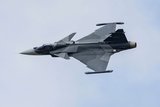
A light attack variant of the Hürjet aircraft is also reportedly in development. (Photo: Turkish Aerospace Industries)
The trainer aircraft will initially seek to replace the Turkish Air Force’s T-38 trainer fleet, with deliveries scheduled for 2026, but TAI confirmed that ‘closer talks’ were underway with potential export customers.


Turkish Aerospace Industries (TAI) confirmed that its Hürjet trainer aircraft had successfully broken the sound-barrier, marking a new and important milestone for the country’s first indigenous supersonic jet aircraft.
“This is really encouraging for us – it’s not the goal but it’s the first step,” Dr. Mehmet Demiroglu, general manager, TAI, said at Saha Expo in Istanbul last week.
This latest development builds on its maiden flight which took place in May 2023. According to the company, the project’s main goal is to replace the Turkish Air Force’s T-38 trainers and F-5 aircraft. In 2024, the Turkish Air Force revealed it
Our news & analysis is now part of Defence Insight®
A Basic-level or higher Defence Insight subscription is now required to view this content.



More from Air Warfare
-
![What does the FY2027 US budget signal for the country’s future airpower plans?]()
What does the FY2027 US budget signal for the country’s future airpower plans?
The record-breaking defence budget request focuses on bolstering some core next-generation aircraft programmes across each domain, although questions remain on the US's commitment to some key defence programmes.
-
![Can UK interceptor efforts keep pace with the rising drone threat?]()
Can UK interceptor efforts keep pace with the rising drone threat?
The recent acquisition announcement for Cambridge Aerospace’s Skyhammer solution is a key step in the UK’s efforts to bolster its counter-UAS capabilities, but more still needs to be done to tackle even smaller drone threats.
-
![Denmark air focus: $2.64 billion UAV market blends US imports with Nordic cooperation]()
Denmark air focus: $2.64 billion UAV market blends US imports with Nordic cooperation
While Denmark appears to be more committed to UAVs than most of its Nordic neighbours, its procurement efforts are likely to be split between American-made systems for its larger requirements and Nordic partnerships for smaller platforms.
-
![France earmarks further $11.6 billion for missiles and drones amid rearmament push]()
France earmarks further $11.6 billion for missiles and drones amid rearmament push
The revised funding allocation will see up to 23% of the additional budget put towards stockpiles of munitions, with the country’s GDP spending expected to reach 2.5% by 2030.