How do we detect and defeat enemy drones?
Learn about the portfolio of sensors and effectors for the complete counter-UAS mission at Raytheon, an RTX business.


Enjoy free access to this sponsored video, all content provided by Raytheon, an RTX business
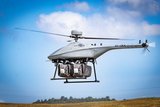
Unmanned aircraft systems (UAS) are a rapidly emerging and disruptive threat on today’s battlefield. Bob Kelley, senior director for Land & Air Defense Systems, shares insights about Raytheon’s portfolio of sensors and effectors for the complete counter-UAS mission. Raytheon’s advanced KuRFS radar is coupled with Coyote® kinetic and non-kinetic effectors to detect and defeat enemy drones using an integrated command-and-control system, while the company’s High-Energy Laser Weapon System can provide additional layered defense against drones.


More from Industry Spotlights
-
![Orchestrating operational readiness across every defence domain]()
Orchestrating operational readiness across every defence domain
Are all systems ready for the next mission? Have upgrades been applied? Are all assets aligned to deploy together, on time and fully prepared? In modern defence operations, readiness is no longer measured platform by platform. It is measured by how well people, assets, data and decisions move together — across land, sea and air.
-
![Extending mission readiness: where XR adds real value in pilot, crew and maintenance training]()
Extending mission readiness: where XR adds real value in pilot, crew and maintenance training
Extended reality (XR) is becoming increasingly relevant in military aviation training, adding a flexible layer to an integrated ecosystem spanning the pilot, crew, and maintenance domains.
-
![Dominating the spectrum: ASELSAN’s EW capabilities take center stage at MSPO 2026]()
Dominating the spectrum: ASELSAN’s EW capabilities take center stage at MSPO 2026
ASELSAN is showcasing its advanced electronic warfare (EW) capabilities at MSPO 2026, highlighting technologies designed to detect, analyse, disrupt and deceive threats across increasingly contested electromagnetic environments.
-
![“Creating a decision advantage”: how C-UAS is evolving to reduce the operator burden]()
“Creating a decision advantage”: how C-UAS is evolving to reduce the operator burden
In Conversation… Speaking to Shephard’s Gerrard Cowan, Dr Brian Shand, Director – Advanced Concepts & Technology at L3Harris, explains how, as operators face growing numbers of low-cost drones, C-UAS providers must focus on reducing operator workload, transforming fragmented sensor data into effective decision-making.
-
![Shield the warfighter, win the fight (video)]()
Shield the warfighter, win the fight (video)
BAE Systems’ Intrepid Shield™ approach delivers full-spectrum electromagnetic protection to detect, exploit, and counter advanced threats.
-
![How joint ventures are expanding Rheinmetall's munitions portfolio (video)]()
How joint ventures are expanding Rheinmetall's munitions portfolio (video)
Roman Köhne, CEO of Rheinmetall's Weapon and Ammunition Division, discusses the company's announcements at Eurosatory 2026, including developments in defence technology, precision systems, industrial partnerships and future capability programmes.