Singapore’s Hermes 900 buy to enhance multi-domain ISR capabilities
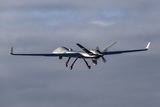
Singapore joins Philippines and Thailand as Hermes 900 operators in the region. (Photo: Elbit Systems)
Drawing on its endurance and substantial payload capacity, the Hermes 900 would provide a boost to Singapore’s ISR capabilities, particularly in the maritime domain.


Singapore has confirmed the acquisition of the Elbit Systems Hermes 900 medium-altitude long-endurance (MALE) uncrewed aerial system (UAS), noting that it was selected after “robust and thorough evaluations”.
The Republic of Singapore Air Force (RSAF) said it will begin taking delivery of the Hermes 900 progressively, with the new platform set to replace its nearly two-decade-old Hermes 450 fleet as part of the Singapore Armed Forces’ SAF 2040 transformation efforts.
The delivery schedule and the total number of aircraft to be procured have not been disclosed.
The announcement corroborates earlier speculation from March 2021 that Singapore had selected the Hermes
Our news & analysis is now part of Defence Insight®
A Basic-level or higher Defence Insight subscription is now required to view this content.



More from Air Warfare
-
![Connecting the layers: how networks can secure the future of European air defence]()
Connecting the layers: how networks can secure the future of European air defence
The rise of drones has reshaped the threat landscape for all European militaries. For industry, future defensive strategies must carefully balance a mix of passive and active measures to address the evolving danger, based around a highly integrated and responsive network of sensors and effectors.
-
![Germany could secure greater influence through sixth-generation fighter partnership with Sweden and Spain]()
Germany could secure greater influence through sixth-generation fighter partnership with Sweden and Spain
Germany is assessing potential pathways for a future sixth-generation fighter capability, including discussions with GCAP partners and Sweden.
-
![UK eyes lightweight satellite communications for UAVs]()
UK eyes lightweight satellite communications for UAVs
The UK is seeking to extend the operational reach of uncrewed aerial vehicles, reflecting growing demand for compact, energy-efficient technology to support beyond-line-of-sight operations.
-
![Loyal wingman programmes gather pace as US and European procurement plans take shape]()
Loyal wingman programmes gather pace as US and European procurement plans take shape
Northrop Grumman, Airbus and Anduril are positioning their uncrewed aerial vehicles for future collaborative combat aircraft contracts in a market that is forecast to exceed $36 billion.