Singapore investigates rotary-wing crewed-uncrewed teaming
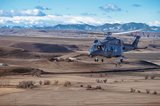
Airbus Helicopters will work with DSTA and the RSAF to demonstrate the value of crewed-uncrewed teaming and how it can extend the capabilities of the H225M. (Photo: author)
Initial exploration of helicopter crewed-uncrewed teaming capabilities will commence in late-2025 and could potentially help shape future programmes involving launched effects.


As a leading nation in unmanned systems deployment, Singapore is exploring how crewed-uncrewed teaming (CUC-T) technologies could enhance its helicopter operations.
In late-June, Airbus Helicopters announced it had signed an agreement with Singapore’s Defence Science and Technology Agency (DSTA) to investigate CUC-T capabilities with its Flexrotor uncrewed aerial systems (UAS) and the Republic of Singapore Air Force’s (RSAF) H225M medium-lift helicopter.
Bruno Even, CEO of Airbus Helicopters, said that “synergising the strengths of highly skilled pilots with the advanced capabilities of uncrewed systems unlocks unprecedented operational flexibility”.
“Working with operators to mature these technologies and test our solutions with real life
Our news & analysis is now part of Defence Insight®
A Basic-level or higher Defence Insight subscription is now required to view this content.


More from Air Warfare
-
![AFA 2026: Swarm Aero eyes 2027 Gamera flight as Textron/Merlin reveal SkyCourier UX]()
AFA 2026: Swarm Aero eyes 2027 Gamera flight as Textron/Merlin reveal SkyCourier UX
Two new uncrewed aircraft concepts target very different US military requirements, from massed long-range strike to autonomous logistics. Shephard spoke with executives from Swarm Aero, Textron Aviation and Merlin Labs at this year's AFA Air, Space and Cyber conference to learn more about their capabilities.
-
![US Navy moves EA-18G Growler Block II electronic-attack upgrade into full-rate production]()
US Navy moves EA-18G Growler Block II electronic-attack upgrade into full-rate production
A US$184.25 million contract for Next Generation Electronic Attack Units advances the Growler’s modernisation as the US Navy confronts ageing systems, parts shortages and obsolescence.
-
![Could the next UAS market boom take place beyond the battlefield?]()
Could the next UAS market boom take place beyond the battlefield?
While the headlines remain dominated by the use of drones for combat operations in Ukraine and other conflicts, there are emerging use cases where the technology could usefully feed back into areas and missions outside the war zone.
-
![How geopolitics and new military alliances are disrupting combat aircraft procurement]()
How geopolitics and new military alliances are disrupting combat aircraft procurement
Selection of fighter aircraft by national governments has always been political. As markets and allegiances shift against a background of global realignment, who will be the winners and losers as new entrants compete with established suppliers?
-
![Singapore’s interest in GCAP reflects its long-term approach to air power]()
Singapore’s interest in GCAP reflects its long-term approach to air power
A potential interest in joining GCAP is indicative of Singapore’s long-term and methodical approach to defence procurement and could benefit its local defence industry.