Singapore Airshow 2026: CCA manufacturers eye growing opportunities in Asia-Pacific
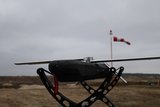
Boeing’s MQ-28 programme director cautioned that countries which are slow to begin studying CCA risk falling behind. (Photo: Australia Department of Defence)
Companies offering collaborative combat aircraft say there is a massive potential for countries adopting the capability in the Asia-Pacific region.


Developments in collaborative combat aircraft (CCA), also known as ‘loyal wingmen’, are progressing at a rapid pace.
Both offerings for the US Air Force’s (USAF) CCA programme – the General Atomics (GA-ASI) YFQ-42A and Anduril’s YFQ-44A – conducted their first flights in 2025. In the same year, Bayraktar’s Kızılelma uncrewed combat air vehicle (UCAV) and Boeing’s MQ-28 Ghost Bat also carried out air-to-air missile firing tests.
A growing number of air forces in the Asia-Pacific region are expected to study CCA programmes to assess how they could leverage the affordability of loyal wingmen – often cited as costing a fraction of fifth-generation fighters
Our news & analysis is now part of Defence Insight®
A Basic-level or higher Defence Insight subscription is now required to view this content.


More from Air Warfare
-
![What does the FY2027 US budget signal for the country’s future airpower plans?]()
What does the FY2027 US budget signal for the country’s future airpower plans?
The record-breaking defence budget request focuses on bolstering some core next-generation aircraft programmes across each domain, although questions remain on the US's commitment to some key defence programmes.
-
![Can UK interceptor efforts keep pace with the rising drone threat?]()
Can UK interceptor efforts keep pace with the rising drone threat?
The recent acquisition announcement for Cambridge Aerospace’s Skyhammer solution is a key step in the UK’s efforts to bolster its counter-UAS capabilities, but more still needs to be done to tackle even smaller drone threats.
-
![France earmarks further $11.6 billion for missiles and drones amid rearmament push]()
France earmarks further $11.6 billion for missiles and drones amid rearmament push
The revised funding allocation will see up to 23% of the additional budget put towards stockpiles of munitions, with the country’s GDP spending expected to reach 2.5% by 2030.
-
![First GCAP contract marks milestone for Edgewing, while UK waits on further funding]()
First GCAP contract marks milestone for Edgewing, while UK waits on further funding
The design and development contract is set to run until the end of June and will now enable the partnership to drive the programme forward as it targets its 2027 demonstrator date.