UK denies Saudi participation in 6th-generation fighter programme
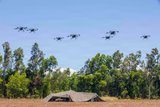
It is possible for the KSA to join the UK programmes ultimately, although this is likely to be only on at a subsystem level. (Image: UK MoD/Crown Copyright)
The UK has categorically stated that the agreement signed between the two countries is unrelated to FCAS or the Global Combat Air Programme despite Saudi announcements.


On 1 March, the Kingdom of Saudi Arabia (KSA) said it would be joining the UK-led Future Combat Air System (FCAS) programme, but the UK said no agreement exists between the two that is related to FCAS or the Global Combat Air Programme (GCAP) effort.
In a Tweet, KSA Minister of Defence Khalid bin Salman said his country and the UK had ‘signed a declaration of KSA’s intent to participate in the FCAS, which will strengthen KSA’s defensive capabilities through a comprehensive partnership that includes joint production and R&D projects for future air systems’.
Things became confusing when the
Our news & analysis is now part of Defence Insight®
A Basic-level or higher Defence Insight subscription is now required to view this content.


More from Air Warfare
-
![Could the next UAS market boom take place beyond the battlefield?]()
Could the next UAS market boom take place beyond the battlefield?
While the headlines remain dominated by the use of drones for combat operations in Ukraine and other conflicts, there are emerging use cases where the technology could usefully feed back into areas and missions outside the war zone.
-
![USAF eyes sensor and weapon upgrades as MH-139A Grey Wolf achieves IOC]()
USAF eyes sensor and weapon upgrades as MH-139A Grey Wolf achieves IOC
The Grey Wolf has entered operational service nearly three years later than originally planned, while new sustainment contracts indicate that some UH-1Ns could remain supported until 2031.
-
![Extending mission readiness: where XR adds real value in pilot, crew and maintenance training]()
Extending mission readiness: where XR adds real value in pilot, crew and maintenance training
Extended reality (XR) is becoming increasingly relevant in military aviation training, adding a flexible layer to an integrated ecosystem spanning the pilot, crew, and maintenance domains.
-
![US military tests AI-powered CUAS turret against drone swarms]()
US military tests AI-powered CUAS turret against drone swarms
As the US continues to invest heavily in counter-drone systems, demand for low-cost, mobile and autonomous technologies is on the rise, with Edda designed to align with these emerging requirements.