Saab’s flight-tested AI agents signal new era of crewed-uncrewed fighter systems
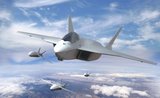
An AI-powered Gripen E aircraft in flight. (Photo: Saab)
Saab is developing artificial intelligence (AI) agents for crewed and uncrewed aircraft, targeting potential operational deployment within months, while expanding its training capabilities, partnerships and ambitions for wider military applications.


Saab has revealed it has developed its own AI agents that can assist pilots on air combat missions and that it expects the technology could enter operational testing or use within months.
The Swedish defence company has tested and flown the AI agents in its Gripen E multirole fighter aircraft. The technology is designed to help pilots make tactical decisions in crewed and uncrewed systems.
“We train decision-making not only on manoeuvres,” said Peter Nilsson, head of advanced programmes at Saab, during a company presentation. “We need to understand behaviour under uncertainty, pressure and change context.”
Saab’s move into AI-assisted air combat comes
Our news & analysis is now part of Defence Insight®
A Basic-level or higher Defence Insight subscription is now required to view this content.



More from Air Warfare
-
![October crewed air review: Israel’s Apache deal bets on crewed aviation in an uncrewed age]()
October crewed air review: Israel’s Apache deal bets on crewed aviation in an uncrewed age
Israel’s $1 billion Apache helicopter order highlights the continued demand for crewed attack aviation, while growing integration with uncrewed systems could shape future modernisation and procurement decisions.
-
![Connecting the layers: how networks can secure the future of European air defence]()
Connecting the layers: how networks can secure the future of European air defence
The rise of drones has reshaped the threat landscape for all European militaries. For industry, future defensive strategies must carefully balance a mix of passive and active measures to address the evolving danger, based around a highly integrated and responsive network of sensors and effectors.
-
![Germany could secure greater influence through sixth-generation fighter partnership with Sweden and Spain]()
Germany could secure greater influence through sixth-generation fighter partnership with Sweden and Spain
Germany is assessing potential pathways for a future sixth-generation fighter capability, including discussions with GCAP partners and Sweden.
-
![Quantum Systems details 480km/h Ukrainian interceptor as production scales up]()
Quantum Systems details 480km/h Ukrainian interceptor as production scales up
Quantum Systems’s Ukraine-made interceptor SPYS is thought to cost approximately 10 times less than Russia's jet-powered uncrewed aerial systems and is being produced at scale.